Latest AI News
Anthropic Releases Claude Fable 5, Its First Mythos-Class Model for General Users
Anthropic is also introducing Claude Mythos 5, a version of the model with some safeguards removed for select cybersecurity and life sciences researchers.
View

It’s not FAANG anymore. It’s MANGOS.
WithSpaceX about to break recordswith an IPO on Friday,Anthropic about to break recordswith its pending IPO, andOpenAI racing to match or best its archrivalswith its own potentially record-breaking IPO, the tech industry will soon have a new set of public company overlords. Should all these IPOs take place as planned, these companies will be replacing the vicious-soundingFAANGcabal — Facebook (now Meta), Amazon, Apple, Netflix, Google (now Alphabet) — with the delightfully sweet-sounding (though truly sour and atrocious if consumed unripe) coterie MANGOS: Meta, Anthropic, Nvidia, Google, OpenAI, SpaceX. As these companies go, so shall the whole tech industry, or so it’s looking like from the summer of 2026. The new acronym was proposed by developer@krishdotdevand@lilscooton X and is now going viral. Of course, FAANG is not exactly dead — Amazon and Netflix remain powerful — but streaming services and Amazon’s e-commerce business, if not its cloud, are perhaps less groundbreaking these days than the AI and agentic companies the tech industry is about to crown. To that we say: Farewell to FAANG! Long live the MANGOS! (At least if they prove to be a nourishing foundation of a healthy economy powered by an upcoming autonomous AI age, and don’t usher in an unpalatable future where we all wind up jobless and broke.) i prefer MANGOSpic.twitter.com/fNnomeqgL5
View
Anthropic’s Claude Fable 5 is a version of Mythos the public can access today
Anthropic is bringing its most powerful AI model to the general public for the first time, but it’s doing it with guardrails. On Tuesday, the AI firm launched Claude Fable 5, the first publicly available version of its Mythos model. Anthropic says Fable 5 excels at software engineering, knowledge work, and vision, but it comes with hard safety limits. In high-risk areas like cybersecurity, biology, chemistry, anddistillation, the model blocks responses and falls back to Claude Opus 4.8. Launched as a preview in April, Mythos was initially limited to a handful of partners due to cybersecurity concerns. Last week, Anthropicexpanded access to hundreds of organizationsacross 15 countries, again focusing on organizations that manage critical infrastructure. Now, a version of that technology is available to anyone through Anthropic’s Claude API and consumption-based Enterprise plans. Access on subscriptions will roll out in stages: through June 22, Fable 5 is be included in Pro, Max, Team, and seat-based Enterprise plans at no extra cost. On June 23, Anthropic will pull Fable 5 from those plans, requiring usage credits going forward, with plans to restore it as a standard subscription feature as soon as possible. Anthropic is also deploying a new version of Mythos, called Mythos 5, to organizations that have already been approved to access the advanced model. Fable’s launch comes as Anthropic prepares to enter the public markets, alongsideOpenAIand Elon Musk’sSpaceX. It also follows theAI firm’s pleaurging major global AI labs to establish a coordinated brake pedal on frontier AI development. Anthropic warned that systems are advancing so rapidly that they may soon achieve recursive self-improvement (RSI), autonomously improving themselves without human intervention. Wary of what a Mythos-class model could do in the wrong hands, Anthropic says it stress-tested its classifiers with jailbreak attempts before releasing Fable 5. “Internally, we ran an external bug bounty that produced no universal jailbreaks in over 1,000 hours of testing. We then worked with external red-teaming orgs which also failed to find universal jailbreaks.” That said, there could still be novel attacks remain possible. As a result, with the launch of Fable 5 and Mythos 5, Anthropic said it will require a 30-day retention on all traffic, even if enterprises previously had zero-retention agreements. Anthropic said it won’t use the data for training, only to “defend against complex and novel attacks, including new jailbreaks,” and “identify and reduce false positives.” The policy could set an industry precedent in which access to increasingly powerful models comes with mandatory data retention policies framed as a safety measure. For those that continue to use the model, not every question will get a Fable 5 answer. Anthropic says the cases in which Fable has to defer to Opus 4.8 are rare, with early data showing at least 95% of Fable sessions running entirely on the model’s own responses. In third-party testing, analytics company Hex said in a statement that Fable was the first to get a 90% on its core analytics benchmark of complex, long-running analytical tasks. “On the hardest questions, it shows strong judgement and attention to nuance,” Hex said. Vibe-coding platform Base44 noted in a statement that Fable is better at “one-shotting full apps” and has excellent tool-calling. AI-powered workspace and agent platform Genspark said Fable beat every other model in its evaluations, and performed significantly better on tasks like UI design and game coding. Pricing for both Fable 5 and Mythos 5 is $10 per million input tokens and $50 per million output tokens, double the price of Opus 4.8. That price alone might serve as a deterrent for widespread use. Many enterprises are growing critical of AI costs afterseeing the bills come inor blowing through their yearly AI budgets early. Advanced models like Opus 4.8 can exacerbate those issues, with advanced reasoning skills that can split a single request into multiple tasks. Anthropic said it expects demand for Fable 5 to be very high and difficult to predict. And indeed some, like shopping rewards platform Rakuten, might think the upside is worth the price point. “At the highest effort, Fable reflects on and validates its own work,” Rakuten said in a statement. “For us, that’s what makes highly autonomous operations possible — the extra thinking pays for itself.”
View

Zoho’s Sridhar Vembu Calls Salesforce a ‘Garbage Bin’
Zoho’s Chief Scientist questioned Salesforce’s long-term pricing model and urged buyers to seek multi-year pricing commitments before switching.
View

How an e-scooter founder raised $5 million to build space data centers
Here’s one metric for tracking SpaceX’s IPO later this week: The company has changed the venture industry’s perspective on long-term, capital-intensive space so much that a talented founder with no space experience can fund a space data center company. Orbital, a new firm that emerged in May from a16z’s startup accelerator program Speedrun with a $5 million seed round, is the latest company promising to do inference in space — just as soon as Starship is flying regularly. Other investors include Basis Set, Human Element, Wayfinder, Antler, Anti Fund, Ascent, Rubik, Zero Knowledge Ventures, LYVC, Feld Ventures, New Legacy, FNDR, UpHonest and Asterisk. Founder and CEO Euwyn Poon previously founded e-scooter company Spin in 2017 andsold it to Forda year later, joining the automotive giant. When he was ready to start a new company, a16z’s Speedrun was eager to get on board, according to partner Andrew Chen, who told TechCrunch that Poon worked through several ideas before landing on space data centers. You’re familiar with the pitch. There’s insatiable demand for AI compute, and deploying it is slow going on Earth. Why not head to space for limitless sunshine and limited environmental reviews? The main problem isthe brutal economicsof launching stuff into orbit, which currently leaves the business case unable to close. Orbital, like many of it competitors, is betting on SpaceX figuring out its Starship rocket and offering it to commercial customers. “We will get to full scale when Starship comes online,” Poon explained. The price of the Falcon 9, the current state of the art, “makes this not economically feasible.” For now, Poon and company — which includes about a dozen folks in Los Angeles, with experience at Amazon LEO, SpaceX, and Northrop Grumman — are working toward a demo flight that will see the company fly an Nvidia Blackwell chip on a partner’s satellite to test Orbital’s radiation shielding and thermal management tech. In 2028, the company hopes to launch its first data-processing spacecraft with Nvidia’s Space-1 Vera Rubin-class GPUs. At that point, the company wants to start doing piece-wise inference work, which would allow it to generate revenue with each satellite launched. That’s a similar path to rival data center start-upStarcloud, which already has a GPU in orbit and plans to launch several more to generate income until Starship enables them to deploy their full constellation. Orbital’s goal is to deploy 10,000 satellites that provide a distributed gigawatt of computing power, with each satellite providing 100 kw of power. For comparison, Elon Musk said SpaceX expects its AI satellites produce up to 150 kw, and Starcloud expects to field larger 200 kw-rated spacecraft to run chips. Some companies are too impatient to wait for Starship. Cowboy Space Company, another space data center startup backed by a16z, recently decided to startbuilding its own rockets. Jeff Bezos’ space company Blue Origin also announced plans to launch data centers into space using its New Glenn launch vehicle. Poon is confident that the breadth of AI demand will allow many companies to succeed. “There’s so many lanes for companies in our space to pursue,” he told TechCrunch, before rattling off an array of choices that included companies pursuing different AI workloads, designs, and concepts of what an space data center looks like. Chen said that Poon’s experience scaling up a company that deployed 250,000 scooters across 100 cities shows he can manage the tricky task of building an aerospace company. Over the long term, a project like this might take a decade and $5 billion or more, but Chen said venture firms are more comfortable with timelines like that. “This kind of thing would have sounded crazy 10 years ago when we were all building mobile apps,” he said. “Starting it in 2026 just lets you tap into all the energy and excitement that’s that’s happening in the capital markets.” Poon found his way into the space data center business by a circuitous route. After leaving Ford, he bought a Nvidia A100 on a lark, co-locating it in a Santa Clara data center and serving open-weight models. That first-hand experience convinced him the value in delivering compute in the era of AI. Now he’s just got to put a couple thousand GPUs in space.
View

Lovable says it has hit $500M in annualized revenue, with 1 million new projects a week
Europe’s fast-growing vibe coding startup, Lovable, tells TechCrunch it has surpassed $500 million in annualized revenue run rate. Lovable last discussed its revenue in February, when the companysaid it crossed $400 million. In August, 2024, Lovable said it could hit $1 billion in annualized revenue within 12 months. It may not be on track to double that figure by summer, but it is still reporting jaw-dropping growth; the company, founded in late 2023, hasn’t yet hit its three-year anniversary. The company also claims it has been used to build over 50 million projects and says usage has accelerated to one million new projects a week. According toa survey of those projectsthat run on the company’s blog, Lovable says its users are primarily non-technical, yet are increasingly building software they intend to monetize or use in their businesses. Its users are founders, designers, and salespeople building websites and e-commerce storefronts, as well as internal tools like CRMs, inventory systems, and HR platforms, the company says. That list tells a story. AI vibe coding platforms have been seen as a threat to legacy SaaS software. Why buy expensive annual contracts when you can just vibe code it yourself? Lovable’s survey appears to offer some data that this is indeed happening. Of course, Lovable — therefore most of the projects built on it — isn’t old enough to answer the harder question about vibe-coded software: will such an approach prove short-lived? That’s because it’s not the initial building part that’s the problem — it’s the maintaining part. Software operates almost like a living organism: even well-written, well-designed code that isn’t AI slop runs atop an ever-shifting stack of dependencies, third-party services, and infrastructure — all of which is constantly being updated, which means end-user software is always breaking. That’s why so many companies choose to buy instead of build. They want others to be responsible for keeping it running. We’ll have to see if Lovable and other vibe coders will transparently report abandoned projects as their platforms mature — aka the not-as-flattering stuff. If those abandonment rates are low, that will be thetrue indication that the so-called SaaSpocalypseis here and here to stay.
View

Sandstone raises $30M to bring AI to in-house legal teams
WithHarveyandLegoraburning through eight-figure funding rounds, legal tools have proven to be one of the fastest-growing and most hotly contested verticals among AI startups. But while those tools focus on private practice, some startups believe there’s still plenty of the legal market that isn’t being served. Sandstone, which announced $30 million in Series A funding on Tuesday, is focused on an overlooked slice of the legal space, focusing on the tangle of overlapping tasks and systems facing in-house legal teams. The Series A was led by Lightspeed Venture Partners, with participation from existing investors at Sequoia, Mantis VC, SV Angel, Operator Partners, Kearny Jackson, Daybreak Ventures, Litquidity Ventures, and others. The Series A comes just six months after a $10 million seed round in January, which was led by Sequoia. As the founders describe it, Sandstone’s initial user base will be the legal departments at small and mid-sized businesses. “They open up their laptop in the morning, they see all the work that’s come in through different intake channels, whether that’s Slack messages, emails, Jira,” co-founder and chief operating officer Jarryd Strydom told TechCrunch. “AI helps them route and triage that work appropriately, and then they can build custom workflows on top of our platform to actually execute work, whether that’s drafting, reviewing, or providing legal analysis.” The result has little in common with legal reasoning systems like Harvey and Legora. Instead, Sandstone focuses on relationship management and workflow automation, both tuned to the unique demands of in-house legal work. As Strydom sees it, the focus on in-house legal departments allows Sandstone to provide value where more generalized AI deployments often flounder. “One of the convictions of Lightspeed was that they really believe in highly specialized vertical AI,” Strydom says, “because it takes a granular understanding of workflows to really nail down how AI can help.” Sandstone will also face heated competition from frontier AI labs, which are increasingly turning their attention to the legal space. Anthropic has beensteadily expandingits Claude for Legal offering, adding new tools in May for case law searches and deposition prep.
View
Apple WWDC 2026: Every Major Announcement You Need to Know
From a smarter Siri to iOS 27 and macOS Golden Gate, here are all the major announcements Apple made at WWDC 2026.
View

Meesho’s AI Bet on Bharat Is Already Driving 75% of Its E-commerce Orders
While Google and OpenAI push into AI commerce, Meesho is betting that understanding Bharat’s shoppers will be its biggest advantage.
View
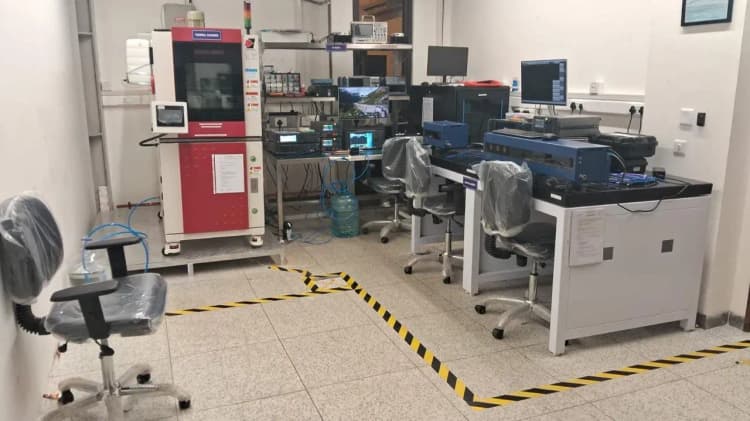
Bengaluru’s AGNIT Semiconductors Opens GaN Testing Lab at IISc With ₹3 Cr Investment
The new facility aims to speed up validation and commercialisation of indigenous semiconductor technologies.
View
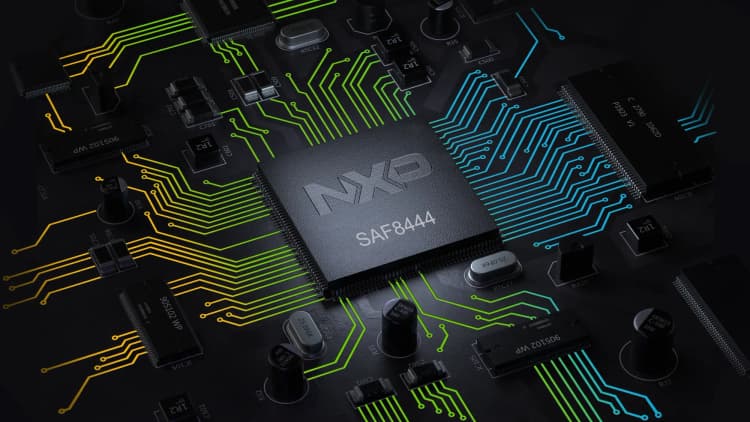
NXP Semiconductors Targets Mass-Market ADAS with New Radar Chip
NXP Semiconductors’ new radar chip aims to cut costs and simplify advanced driver assistance systems in vehicles.
View
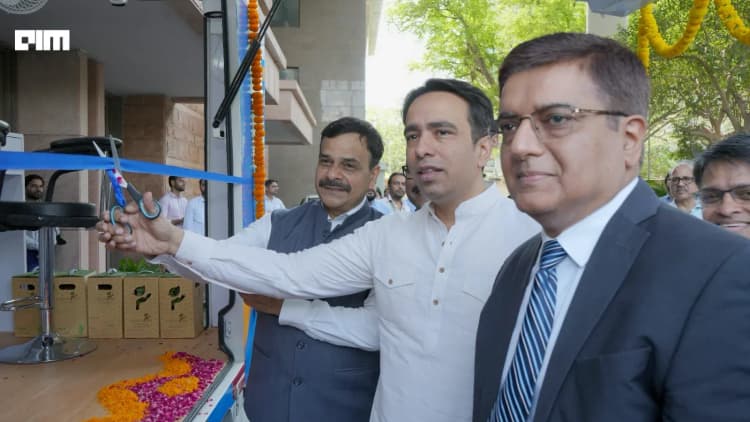
Dell Expands Solar Community Hubs Across India to Boost AI-Enabled Skilling & Digital Inclusion
The Solar Community Hub programme has reached 18 districts across 14 states, directly impacting 2.67 million beneficiaries.
View