Latest AI News

ClickHouse Hires Databricks Veteran Ed Lenta to Lead APAC Expansion
The company also named Takeshi Kaneko as Country Manager for Japan. Kaneko previously led Nutanix Japan and held senior roles at Red Hat and Microsoft in the country.
View
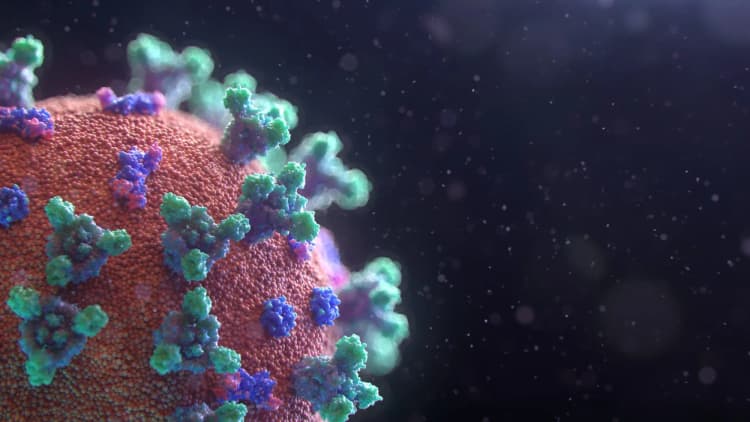
Cambridge Scientists Test World’s First AI-Designed Universal Vaccine in Human
Researchers at Cambridge University say the technology could help prepare for future pandemics by enabling vaccines to target entire virus families before new outbreaks emerge.
View

Zoho’s Nathu La Redefines What a SaaS Company Builds
Zoho has already deployed 1,000 to 2,000 units of Nathu La in pre-production across its data centres. The company says the system is optimised for virtualisation, storage, HPC and AI inference workloads.
View
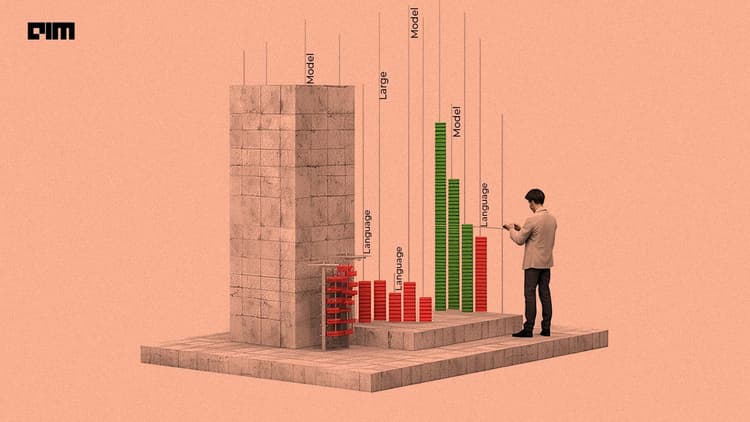
OpenAI Researcher Says AI Benchmarks Fail to Measure Frontier Model Capabilities
Noam Brown argues benchmark scores increasingly depend on inference compute, obscuring the true capabilities of frontier models.
View

Krisp Launches Real-Time Voice Translation API for Developers
The platform supports 61 languages and is designed to handle accented speech, background noise and industry-specific terminology in real time.
View

How Justin Ernest invested nearly $500M into hot startups without a traditional VC fund
Last year, Justin Ernest noticed a massive gap in how venture capital was working: Family offices and smaller institutional investors were eager to invest in the fastest-growing AI companies but couldn’t get access to those cap tables. Having spent over five years at Playground Global investing in deep tech and helping lead fundraising, Ernest was confident his connections to both investors and founders would allow him to bridge that gap. Instead of launching a formal VC fund, a process he says takes new managers anywhere from 12 to 18 months, Ernest used his network to secure allocations of stock in high-profile, later-stage companies. He then offers these individual deals to a group of about 30 smaller institutional investors using special purpose vehicles (SPVs), which act as single-deal funds. Over the last 12 months, his firm,Sabertooth Capital, has invested nearly $500 million into 10 companies, including Anthropic, Anduril, Base Power, Databricks, PsiQuantum, and SpaceX. The firm treats each deal as its own separate fund, in most cases structuring it as an SPV, in which the fund’s investors buy shares in the vehicle that owns the stock. He’s writing checks ranging from $10 million to $275 million — meaning he’s gaining significant chunks of shares — and always participating in official, company-approved funding rounds. Sabertooth is not the only firm offering family offices an opportunity to purchase equity in individual high-profile, late-stage startups. However, Ernest quickly raised a significant amount of cash from them because, in the sometimes-shady world of small allocations and SPVs targeting family offices, he’s earned a solid reputation. “Justin is authentically an investor,” said Benjamin Wagner, a CIO for a family office managing the wealth of 50 individuals. “He has judgment, he has expertise, he’s very technical, that really distinguishes him from other organizations that tend to, in my opinion, just trying to aggregate capital.” When Wagner tried to invest directly in PsiQuantum, the quantum computing startup last valued at $7 billion, the company’s CFO suggested that he invest through Sabertooth. “So, the first time I met [Ernest], I knew he was legitimate,” Wagner said. “Justin’s access is definitely different from some of these fly-by-night organizations.” That validation is extremely important. At a time when startups like Anthropic and Anduril are cracking down onunauthorized SPVs, investing through Sabertooth gives smaller limited partners some peace of mind. They know they are entrusting their money to an investor who is directly vetted and respected by the companies themselves. Beyond technical knowledge, the Harvard Business School graduate honed his communication skills after largely overcoming a childhood speech impediment. Ernest credits his ability to secure allocations of stock when highly coveted tech companies are raising to his wide network. “I’ve always found that my sort of superpower is being the nucleus of my network, and I like to use that and utilize that in a very strategic way,” he told TechCrunch. For instance, he can generally obtain investor capital for a new SPV from family offices on a tight timeline. “I have a captive set of LPs,” he said. “I can usually make four or five or six phone calls, and I know exactly what my LPs will commit.” Ernest told TechCrunch that for now, he wants to continue growing his business of raising funds for specific companies on behalf of his dedicated LP base. However, his ultimate goal is to eventually raise a traditional venture fund. That’s a difficult task, but he believes Sabertooth’s strong returns via these one-off SPVs to prove his track record, something investors care about most when deciding to back a new fund. He’s on his way with that wish. Sabertooth has already had one major big return from chipmaker Groq, which was licensed and acqui-hired by Nvidia for$20 billionlate last year. Next up is SpaceX’s highly anticipated IPO this Friday, along with Anthropic’s expected public listing later this year. They are poised to deliver an even greater windfall for his investors. But SPVs don’t have the same kind of street cred as traditional VC funds. Yet Ernest remains confident that starting with them, and earning a solid rep with family offices, rather than launching an emerging venture fund and duking it out with competitors was the right strategic move. “I wanted to be in the action,” he said. “I think this will end up being one of the best vintages of our lifetime.” Updated to reflect Sabertooth’s total capital deployed.
View
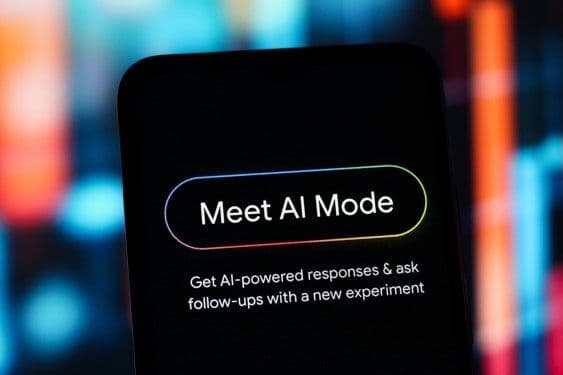
Google just fired a warning shot in the AI subscription price wars
Google just made its budget AI subscription plan a lot more budget-friendly, bringing a price war that’s been brewing in emerging markets squarely to American consumers. The company announced Monday that it is cutting the monthly price of Google AI Plus from $7.99 to $4.99 — while doubling the storage included at that tier, from 200 gigabytes to 400 gigabytes. Vikas Kansal, product lead for Gemini AI subscriptions,said on Xthat the storage updates would roll out to users over the next several days. Google AI Pluslaunched in Januaryas the most affordable paid AI subscription in the U.S. market, aimed at individual users and students rather than enterprise customers. Apparently that wasn’t cheap enough. It includes adecent feature set, too, including video generation via Omni Flash; the creative studio Google Flow; and NotebookLM, Google’s AI research assistant. For heavier users, Google also offers AI Pro and AI Ultra at higher price points and usage limits. The price cut is worth indexing on for reasons beyond Google’s own product roadmap. Subscription pricing hasn’t yet been a key battleground among AI providers in the U.S. But that’s changing in real time, suggests Chi-Hua Chien, co-founder and managing partner at consumer-focused venture firm Goodwater Capital; he sees Monday’s announcement as the next salvo in the commoditization era for AI infrastructure, pointing to Google’s structural advantages — vertical integration, distribution, the ability to bundle — as precisely the kind of force that’s likely to erode margins for purer-play AI providers over time. The historical parallel he reaches for is instructive. “If you look at the web era, the infrastructure companies were Microsoft, Cisco, Oracle, Northern Telecom, Lucent, Akamai, Equinix,” he told TechCrunch. “A lot of those companies survived for a period of time but aren’t worth a lot today.” The reason, he said, is that during every big tech shift — from PC to web to mobile — the infrastructure players “get commoditized very aggressively because the end customer doesn’t think, ‘Ooh, are my bits moving on Cisco networking equipment?’ They’re just thinking, ‘How do I move my bits as cheaply as possible?’” He sees the same dynamic coming in the not-too-distant future for today’s AI infrastructure layer — including the frontier model providers themselves. “My prediction for a lot of these infrastructure companies — and when I say infrastructure, I mean an OpenAI or an Anthropic, or the backend components, energy, chips, hosting — there will be a period of time when these companies are valuable,” he said. “But over time, you will see them get increasingly commoditized.” It’s certainly something that a bigger pool of investors will be pondering soon. Both OpenAI and Anthropic have filed confidentially to go public, and their ability to command premium valuations may soon be tested by exactly the kind of price competition Chien is describing. Thatcompetitionhas been building for nearly a year in markets like India, one of the fastest-growing AI user bases in the world. OpenAIdrew first bloodthere in August of last year, launching ChatGPT Go at roughly $4.60 a month — a fraction of its standard $20 Plus plan. Googlefollowed in Decemberwith a sub-$5 AI Plus plan of its own for Indian users. Monday’s announcement suggests the same logic that drove those emerging-market moves — undercut, bundle, and capture users before rivals do — has now crossed over to the U.S. market. Anthropic, notably, hasn’t followed. Unlike OpenAI and Google, it has yet to introduce localized pricing for India or a budget tier anywhere, a move that may become harder to avoid as its rivals keep slashing prices.
View
Anthropic’s Claude Fable 5 is a version of Mythos the public can access today
Anthropic is bringing its most powerful AI model to the general public for the first time, but it’s doing it with guardrails. On Tuesday, the AI firm launched Claude Fable 5, the first publicly available version of its Mythos model. Anthropic says Fable 5 excels at software engineering, knowledge work, and vision, but it comes with hard safety limits. In high-risk areas like cybersecurity, biology, chemistry, anddistillation, the model blocks responses and falls back to Claude Opus 4.8. Launched as a preview in April, Mythos was initially limited to a handful of partners due to cybersecurity concerns. Last week, Anthropicexpanded access to hundreds of organizationsacross 15 countries, again focusing on organizations that manage critical infrastructure. Now a version of that technology is available to anyone through Anthropic’s Claude API and consumption-based Enterprise plans. Access on subscriptions will roll out in stages: Through June 22, Fable 5 will be included in Pro, Max, Team, and seat-based Enterprise plans at no extra cost. On June 23, Anthropic will pull Fable 5 from those plans, requiring usage credits going forward, with plans to restore it as a standard subscription feature as soon as possible. Anthropic is also deploying a new version of Mythos, called Mythos 5, to organizations that have already been approved to access the advanced model. Fable’s launch comes as Anthropic prepares to enter the public markets, alongsideOpenAIand Elon Musk’sSpaceX. It also follows theAI firm’s pleaurging major global AI labs to establish a coordinated brake pedal on frontier AI development. Anthropic warned that systems are advancing so rapidly that they may soon achieve recursive self-improvement (RSI), autonomously improving themselves without human intervention. Wary of what a Mythos-class model could do in the wrong hands, Anthropic says it stress-tested its classifiers with jailbreak attempts before releasing Fable 5. “Internally, we ran an external bug bounty that produced no universal jailbreaks in over 1,000 hours of testing. We then worked with external red-teaming orgs which also failed to find universal jailbreaks.” That said, there could still be novel attacks. As a result, with the launch of Fable 5 and Mythos 5, Anthropic said it will require a 30-day retention on all traffic, even if enterprises previously had zero-retention agreements. The company said it won’t use the data for training and will use it only to “defend against complex and novel attacks, including new jailbreaks,” and “identify and reduce false positives.” The policy could set an industry precedent in which access to increasingly powerful models comes with mandatory data-retention policies framed as a safety measure. For those who continue to use the model, not every question will get a Fable 5 answer. Anthropic says the cases in which Fable has to defer to Opus 4.8 are rare, with early data showing at least 95% of Fable sessions running entirely on the model’s own responses. In third-party testing, analytics company Hex said in a statement that Fable was the first to get a 90% on its core analytics benchmark of complex, long-running analytical tasks. “On the hardest questions, it shows strong judgement and attention to nuance,” Hex said. Vibe-coding platform Base44 noted in a statement that Fable is better at “one-shotting full apps” and has excellent tool-calling. AI-powered workspace and agent platform Genspark said Fable beat every other model in its evaluations and performed significantly better on tasks like UI design and game coding. Pricing for both Fable 5 and Mythos 5 is $10 per million input tokens and $50 per million output tokens, double the price of Opus 4.8. That price alone might serve as a deterrent for widespread use. Many enterprises are growing critical of AI costs afterseeing the bills come inor blowing through their yearly AI budgets early. Advanced models like Opus 4.8 can exacerbate those issues, with advanced reasoning skills that can split a single request into multiple tasks. Anthropic said it expects demand for Fable 5 to be very high and difficult to predict. And indeed some, like shopping rewards platform Rakuten, might think the upside is worth the price point. “At the highest effort, Fable reflects on and validates its own work,” Rakuten said in a statement. “For us, that’s what makes highly autonomous operations possible — the extra thinking pays for itself.”
View
WWDC 2026: Everything announced on Siri AI, iOS 27, Apple Intelligence, and more
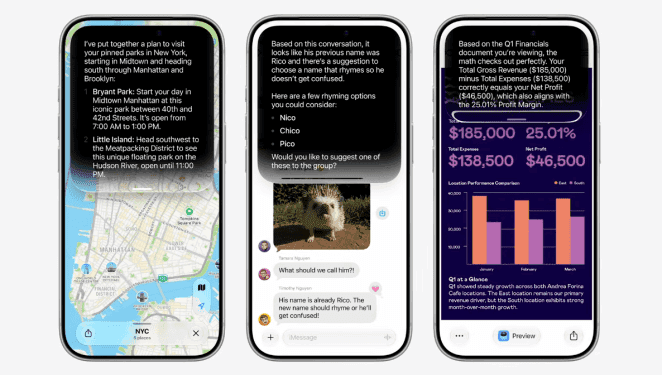
Apple’s WWDC 2026 event kicked off yesterday at Apple Park, starting a week packed with reveals about Siri AI, iOS 27, Apple Intelligence, and more, along with developer events and demos as Apple looks to reassert itself with users and developers who haven’t been impressed with their releases within the wildly competitive AI space. It also marks CEO Tim Cook’s last WWCD with the company, afterannouncing he’s handing things off to Senior Vice President of Hardware Engineering John Ternus on September 1. Did they succeed? Keep tabs on this page, and the rest of our ongoing coverage, to find out! This is far from our consumer news editor Sarah Perez’s first WWDC, and with all that context in mind,she provides the subtext on much of what was being showcased. For the past two years, Apple has been racing to catch up in AI while frustrations with its core software quietly added up: a design overhaul users hated, a search function that barely worked, a file-sharing feature that routinely failed, and a Health app that didn’t focus enough on half its user base. Apple didn’t say any of that on Monday. But the structure of its WWDC keynote said it for them, leading with fixes before features, and framing a better Siri as one item on a long list of improvements rather than the main event. As expected, Apple made the case for an improved experience with its long-standing Siri assistant, which it admitted faces greater expectations from users in the age of AI. With Google Gemini under the hood, Apple claims that the new Siri updates will make it more capable, conversational, and compatible with visual intelligence, and it will behoused in a stand-alone appin addition to working across existing apps.You can get a full rundown of all the new Siri AI updates right here. Before rolling out the enhancements and features, Apple was adamant about its privacy-centric approach to AI. “We believe privacy in AI is non-negotiable,” Apple senior vice president Craig Federighi said during the stream, going so far as to say that “data is only used to execute your request, and outside experts can continue to verify this promise at any time.” No, Apple didn’t make such a big reveal during WWDC, butresearcher @M1Astra dug through files within the iOS 27 developer betaand found references to things like “foldState,” “angleDegrees,” and other things that allude to the states a foldable device can be put into. And it’s not like there hasn’t been a bounty of foldable iPhone rumors over the past few years. Stay tuned for Apple’s annual iPhone event in September to see if we do get a formal reveal, unless Ternus really will be changing things up in the post-Cook era. To go along with its new Siri AI overhaul, the tech giant announced a slew of newApple Intelligence updatesacross its apps, including tab management for Safari, one-tap password updating, cross-app context awareness, and more. Additionally, Messages is getting AI-powered reply suggestions, while the Phone app can now pull context from other apps like Mail and Messages mid-call. Apple said it collaborated with Google and the Gemini family of models to develop the next generation of Apple Foundation Models that power its integrated Apple Intelligence experiences. If you are among those who aren’t exactly keen on last year’s Liquid Glass design updates,you aren’t alone. And while Apple isn’t switching to a new aesthetic,you will be able to dial back some of its elements, or really highlight them if you’re vibing with it.And for the app icon critics out there fresh from Spotify’s disco ball update, Apple showed off a new, layered approach to Liquid Glass within its apps. As is the case every year, a number of small tweaks and updates arriving with the upcoming iOS update didn’t get their time in the sun during Apple’s broadcast, but that doesn’t mean they’re not noteworthy.Ivan Mehta brought together several of them right here, including: The AI image-generating app Image Playground hasn’t exactly taken the world by storm, which depending on your view on AI slop may be a good thing. However, Apple rolled out a renewed pitch for users to actually start generating images, with a focus on its possible uses across many features of your devices, with an exclusion set on any training based on photos generated using the app. That, plus performance updates coming alongside Apple Intelligence upgrades, might at leasttake it out of the “suck” category for TechCrunch senior writer Amanda Silberling. Claiming that its upcoming update will be “available to more users than any iOS release ever,” Apple revealed that all devices from the iPhone 11 onward will be eligible for their upcoming software update. And that update comes with a flurry of performance improvements it’s touting across a number of its OS releases this year, with Apple claiming that new photos will appear 70% more swiftly, AirDrop transfers will be 80% faster, and CPU schedulers will be improved to help multitasking. Apple spent a significant amount of the WWDC event showcasing a suite of tools for parents looking for greater control over what their children’s devices can and can’t do. Parents will be able to determine who their kid can call on the phone and what apps and websites they can access, with Apple making suggestions about how those restrictions can change over time. By default, though, its “Ask to Browse” feature limits access, and “Ask to Buy” for App Store and in-app purchases will be set as a default for devices set up for children younger than 13.You can get more parental control details right here. Frustrated with searching through your iPhone for, well, pretty much anything? Search got a dedicated session during WWDC to tout a series of improvements,which you can learn more about here. “We’ve all had that moment where you search for something you know is there, but it just won’t show up,” Stacey Ford, vice president of OS Program Management said. “So on iOS, iPadOS, and macOS, we’ve rebuilt the foundation of search that powers Spotlight, Photos, and Mail. To take on popular AI photo-editing apps, Apple is bringing new AI features to itsPhotos app. A new spatial “Reframe” feature will let you use AI to adjust the perspective of an image as if you had repositioned the camera in the original scene. The new “Extend” tool expands images to adjust the aspect ratio or add more to a scene. The app’s popular “Cleanup” tool is also getting an upgrade so users can remove distractions with better quality and more realistic infill with generative AI. Apple is launching a newsystemwide dictation experiencethat’s built into the keyboard on iOS 27 and can correct spellings, punctuation, and capitalization. The update comes as AI dictation apps like Wispr Flow and Willow have been gaining popularity. These apps clean up filler words like “ums” and “ahs” and format the text after transcribing based on context. For the first time,developers will be able to partner with each other to provide access to different subscriptions, for a lower bundled price. It’s not an uncommon practice for anyone who’s been pitched by various streaming services searching for subscriber growth, but it’s the first time this is available for things like productivity or photography apps in the App Store. And if a bundled offer isn’t compelling enough, your interests and behavior will power a new means of discovery for developers:personalized recommendations that will appear across several App Store locations. These recommendations will include “App Notes” that detail why they’re appearing among other apps. Apple is using AI to make its visual-scripting tool, Shortcuts, easier to use in iOS 27. Theupdated experiencewill allow users to write a prompt and simply describe what they want to do. The AI update makes the Shortcuts app more approachable and expands what non-technical people can do. Apple’s Health app is addingperimenopause and menopausesupport to its existing cycle-tracking feature. The update embraces a topic that has gone mainstream, giving Apple a new product opportunity in a rapidly expanding market, as digital health tools targeting this demographic have attracted significant investment in recent years. At the end of the keynote, Tim Cook had a farewell message reflecting on his time as CEO: Over the years, you have helped people connect, create, learn, and experience the world in extraordinary new ways, and with the incredible capabilities we introduce today, and so many more still to come, I truly believe the best is still ahead at Apple. Getting the best products in the world to deliver experiences that enrich people’s lives has always been our North Star. It’s been the honor of a lifetime to help advance that mission with teams whose creativity, care, and conviction continue to make a lasting difference in people’s lives. Miss out on WWDC? You can always catch up on the archive of the full event via the stream above oron Apple’s YouTube page right here.
View

Can tech companies learn to love cheaper AI models?
The AI boom has been built on a basic assumption: Bigger models are more powerful, and the most powerful models win. Now, the industry is about to learn what happens if that assumption starts to break. Mounting costs have already pressured users to give smaller and cheaper models a second look. Thiscost-conscious model-shoppingis new and it’s unclear how it will affect the industry, but the impact is likely to be significant. One prediction, laid out best by Coinbase co-founder Brian Armstrong, is that it will result in the vast majority of tasks shifting to cheaper models. “[D]emand for intelligence is near infinite, but 80% of workloads will be running on 99% cheaper models within 12-18 months,” Armstrongwrote on X. “20% of workloads will still run on latest gen models where IQ maxing is important.” It’s hard to overstate what a significant shift it will be for the AI industry if Armstrong’s prediction comes true. Before now, most AI companies have competed on quality, which has meant defaulting to the most advanced available model. If those same jobs can be handled by cheaper models without affecting quality, it would mean a massive shift in the economics of AI. And critically, much of the savings would be coming out of the pockets of the big labs, dealing a financial blow to OpenAI and Anthropic just as they’re heading for their IPOs. It’s a potentially seismic change in the industry, resting on one basic question: Are companies ready to switch to smaller models? Initial tests suggest that, when the system is arranged right, cheaper models could sub in without any sacrifice in quality. In a recent test by the legal AI tool Harvey, the company was able to reduce inference costs by 3x without reducing quality. The test,performed in partnershipwith the inference platform Fireworks AI, combined Claude Opus and Fireworks’ GLM 5.1, and shifted to Opus for the most intensive tasks. The result was a significantly lower load in terms of server time and overall cost. “Quality comes first, and in legal it always will,” Harvey co-founder Gabe Pereyra told TechCrunch, referring to the AI legal services his startup provides. “However, the definition of quality is evolving from simply using the most powerful model for everything, to using the best model that gets the right answer most efficiently.” This trend is often framed in terms of major labs versus Chinese models or open-weight ones, but that misses the bigger point. The real divide isn’t between proprietary and open models; it’s between large models and small ones. You can save money by switching from GPT-5.5 to DeepSeek’s V4 Flash, but switching to GPT-5.4-mini works just as well. There’s an active price war going on between in-house inference from the big labs and independently served open-weight models. For the bigger question of small versus large, it doesn’t really matter which kind of small model wins out. All of this might seem obvious — of course you shouldn’t use more compute than necessary — but it runs counter to the scaling-first approach that has dominated the industry until now. Inspired bythe bitter lesson, labs have leaned hard into training the most compute-intensive models possible, pushing the frontier of what AI models can do. With prices heavily subsidized by investors, clients had no reason to choose anything but the most advanced option. With token prices rising and subsidies slowing down, users are facing cost pressure for the first time. We don’t know whether the new cost pressure will actually drive enterprise users to smaller models. They could just as easily economize by making fewer calls, using less context, or simply giving up on the least promising deployments. But if it turns out that most deployments can be run just as well on a smaller model, it could put a serious damper on the growing demand for inference — and raise new questions about how to justify the cost of training a frontier model.
View
Anthropic’s Fable 5 can make weirdly fun video games with the click of a button
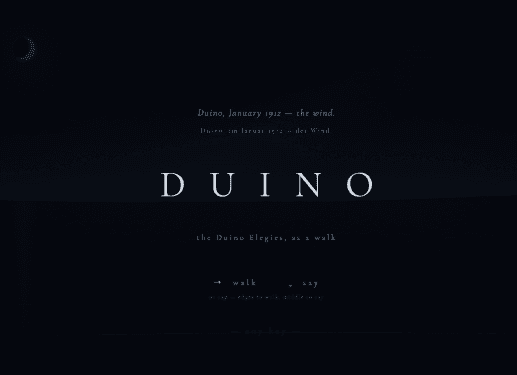
Anthropic hasreleased Claude Fable 5, the first publicly available version of itsclosely watchedMythos model. What can Fable actually do? All kinds of things, it turns out. Ethan Mollick, a notable AI researcher and University of Pennsylvania scholar,has been playing aroundwith the model and seems to be having a lot of fun. In his testing, Fable consistently “outperformed basically every other public model I have used by a considerable margin,” Mollickwrote Tuesdayon his Substack. He added that it was “capable across many problems and produced some startling results — it would work up to a dozen hours executing on multi-page specifications.” Perhaps most strikingly, Mollick used Fable to create a variety of video games — all of which were generated via “one initial prompt” in Claude Code, the researcher says. Among these,Snakeis exactly what it sounds like. You’re a Pac-Man-like snake and you roam around eating apples. The snake never stops moving, and if you run off the screen, you die. It’s very 1980s arcade but, like many of those old games, it’s weirdly addicting. I played it longer than I’d like to admit before remembering I am a gainfully employed writer and not, in fact, a serpent who likes fruit. Then there wasStrata, where you’re roaming around in a seemingly endless network of subterranean tunnels and the goal is just to light as many lanterns as possible. The graphics look like a degraded version of Myst — they aren’t great — but the fact that the game exists at all, generated from a single prompt, is impressive. Mollick even managed to createDuino, a game based on the Duino Elegies, the celebrated cycle of poems by poet Rainer Maria Rilke. I like the animation here best — the player is a lone figure in a nocturnal landscape — although there isn’t much to the gameplay other than walking around while Rilke passages materialize on the screen. Aside from the variety of instant games Mollick produced, he also used Fable to create anisochronic map— a visualization showing how long it takes to travel between any two locations. The accuracy and detail is arresting. The implications are pretty clear. Software projects that once required entire teams — games, mapping tools, highly complex specifications — are now being spun up from a single prompt. It’s reason for vibe coders of the world to rejoice. As for founders and operators watching AI capability curves, it’s a useful data point about how quickly the floor is rising.
View

Hey Siri, here’s what I actually want from AI
Two years and a$250 million lawsuitlater, Apple’sAI Siri revampis on its way to your phones and laptops and even yourmixed reality headset, if you happen to be one of like three people who actually uses the Apple Vision Pro. Apple revealed a slew of new information at Monday’sWWDC keynoteabout these long-awaited, AI-powered updates that can take advantage of the fact that our hardware is supposedly “built for Apple Intelligence.” To be honest, it’s hard for AI to impress me enough that I’ll use it in my day-to-day life. I still don’t trust LLMs to provide consistently accurate information, I find it ethically untenable (and uncool) to use AI to help me write, and I don’t feel the insatiable urge to knowwhat I would look like as a Studio Ghibli character. But every once in a while, the promise of AI tempts me. That’s how I felt watching Apple’sSiri AI demos, which depict a world where your phone comes with an always-on, constantly-working assistant who knows everything about you and can help you keep track of all of the conversations happening on like 12 different apps on your phone at any given moment. To paraphrase Katy Perry, it feels so wrong (what are the privacy implications?), but it also feels so right (I am so overwhelmed by my phone and am begging for help parsing it all). I want Siri to be my own personal Emily from “The Devil Wears Prada” — a “second brain” that anticipates my needs before I even know what they are. I want Siri to read my texts and automatically make an event when a friend and I decide we’re going to meet up for dinner on Thursday. I want Siri to remind me when I’m walking past CVS that I have a prescription ready for pickup. If I forget to reply to an important work email, I want Siri to remind me that I didn’t write back yet. Siri AI won’t be able to do all of that out of the box, but it’s moving in the right direction. In one example at WWDC, Justin Titi, an Apple senior director working on AI engineering, asks the smart assistant to remind him of the dessert that his daughter mentioned recently. Siri searches across Titi’s phone to find a text from about a month ago, when his daughter mentioned that she wanted to make coconut cookies. It’s simple, but asking Siri to find that message saves time, rather than scrolling up through an entire month of conversation looking for that one specific text. The new-and-improved Siri is designed to use “personal context,” which refers to any information you put into Apple-native apps, like iMessage, Notes, Calendar, Mail, Photos, and more. Siri will also be aware of what’s on your screen, so for example, if you scroll past a picture of a nice park on Instagram, you can ask it to find out where that park is. (We still don’t know if Siri will be able to integrate into non-native Apple apps; it seems like it might be up to the developers to make that happen.) There already are apps likePoppyandPokethat try to create this kind of mobile, agentic AI. But the paradox of these AI personal assistant tools is that you have to give up a lot of personal data and privacy to make them work correctly, which may just cause you more trouble (remember that time when aMeta researcherranOpenClawand accidentally deleted her entire inbox?). I can’t say that I love giving any tech giant my personal data, but Apple at least seems to care more about security than the other FAANG (MANGOS?) companies. On-device AI will always be more secure and less energy intensive than cloud computing, since the data is processed directly on your phone. (This is how current Apple Intelligence features like email summaries and AI emojis are generated.) But for the more complex tasks that Siri will confront, Apple pioneeredprivate cloud compute(PCC), a way for devices to parse complex data over the cloud without even exposing your data to Apple itself. (If it’s possible to hack PCC, it hasn’t happened yet, even though Apple offers a$1 million bug bounty.) In a recent conversation with the writerCalvin Kasulke— who is so internet-brained that hewrote a novel that takes place exclusively on Slack— I confessed what feels like a taboo desire to outsource all of my “life admin” to an AI. “When you talk about the nonsense of the tech detritus in your life… I think the question is, ‘Is all that you have necessary?’ If it is necessary, isn’t it worth cultivating the skill and spending the time to do it?” Calvin told me. “I don’t think that those are skills that one should allow to atrophy.” He makes a good point: Maybe instead of asking Siri to remind me about the TV show that my friend told me I should watch, I could pay more attention when I’m talking to my friends. I don’t want to get into the habit of forgetting more consequential details from my conversations. “I’m sorry, but all of the commercials that are like, ‘What if I had the computer buy my kid a birthday gift?’ I’m like, ‘What if you learned what your kid likes?’ … Like, I don’t know man, it sounds like [they] don’t want to do the fundamental act of being a person,” he said. Maybe when I say I want Siri to be like Emily from “The Devil Wears Prada,” I should remember that Emily’s character is on the verge of a crash-out. I know I can’t psychologically impact Siri like Miranda Priestly damaged Emily, but will I become the kind of person who can’t function without the friendly robot voice in my phone? Do I want to be that person? At least if I decide to opt out from all of this, Apple will make that possible. Unlike Google’s controversialSearch overhaul, the new AI Siri can be toggled on and off, so you don’t have to use it. Until then, I’ll have to decide if it’s worth it to taste the forbidden fruit of Siri AI.
View