Latest AI News
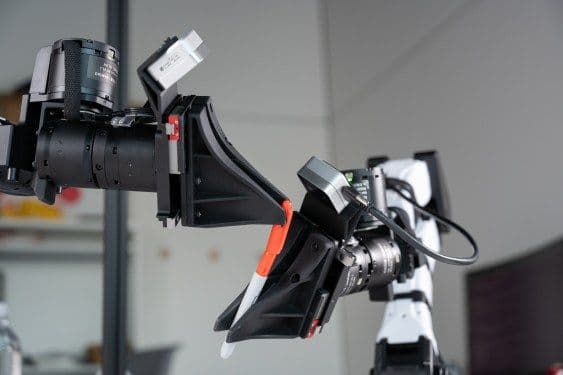
Collecting robot training data is dirty, unglamorous work. Some AI labs are already paying XDOF to do it.
Two weeks ago, OpenAIsaidit would relaunch the robotics program it shuttered in 2021 — the latest signal that the biggest AI labs are racing to teach machines to operate in the physical world. But building capable robots requires something the AI industry doesn’t yet have, which is the training data to match that used for language models. That gap is creating a new kind of infrastructure business. Unlike LLMs that were trained on a vast sea of publicly available text, robots need data that captures physical interaction, and that kind of data barely exists. YouTube videos and footage captured by gig workers are low-fidelity and hard to reconcile with the physical world. XDOF(pronounced “ecks-doff”), emerging from stealth today, is betting that the next great bottleneck in AI isn’t models or chips, but the data feedback loop needed to teach robots how to interact with the physical world. The startup aims to build the data pipelines, collection tools, and annotation systems that frontier labs and robotics companies can’t easily build themselves — and has raised $70 million from Thrive Capital, Spark Capital, a16z, Lux, and WndrCo to do it. Co-founder and CEO Philipp Wu says XDOF, which has about 60 employees, is already working with 20 customers, including several frontier AI labs, but cannot name them. “All of the top labs are trying to pursue robotics,” Wu said. “We’ve already seen some of the downfalls of falling a little bit behind in the language model race … you don’t want to be in this type of situation where you pursue this technology too late, and everyone is in this boat where physical AI is the next frontier.” Wu ran into this problem himself as a PhD student at UC Berkeley. His focus was on enabling robots to learn skills from large-scale datasets. There was just one problem. “We didn’t have large-scale data to work with,” he told TechCrunch. “There was this chicken-and-egg problem — we first needed to actually collect data before we could even ask how to train a foundation model for robotics.” Wu and his future XDOF co-founder and CTO, Fred Shentu, worked on a project called GELLO, a low-cost teleoperation system that lets a human operator control a robotic arm to generate training data. “It ended up becoming a very influential paper in robotics, because a lot of people had similar needs and bottlenecks, and many started leveraging this type of device for data collection,” Wu said. Spotting the opportunity, Wu, Shentu, and third co-founder and Chief Operating Officer Nemo Jin launched XDOF in October 2024 to provide a data ecosystem for companies pursuing robotics models. Mindful that data provision alone can be a dead-end business, the company is also focused on data cleaning, tooling, and annotation — creating a self-reinforcing feedback loop for robot trainers. As a starting point, the company is partnering with UC Berkeley’s AI Research lab to release what it believes is the largest collection of high-quality robot training data ever assembled, dubbedABC. It includes 130,000 trajectories of robot manipulation data, 300 hours of simulation, and 100 hours of evaluations. That kind of scaled-up pre-training data has never been available to academia before. “We’ve seen in language, image generation, and other fields, that when models and data are released, the community achieves things that you wouldn’t necessarily have expected,” David McAllister, a Berkeley PhD student who helped organize the release, told TechCrunch. The team has already used the data to train robots on benchmark tasks like folding T-shirts and flattening boxes, or loading AirPods into their cases. The company plans to work across three tiers of a data pyramid. The most valuable tier is teleoperation data collected on the actual robot being deployed; next comes teleoperated robots gathering more general data, as with GELLO; and finally “egocentric” data gathered by humans performing everyday tasks, for which XDOF plans to build its own wearable sensors. “Your camera choice is going to affect the quality of your data — which is going to affect how your hand-tracking algorithm performs,” Wu said. “If you don’t design the hardware well from the start, the data you collect might have very specific problems that you didn’t anticipate.” The company plans to hire and train armies of teleoperators and egocentric data operators around the world — a labor-intensive model that raises an obvious question: Why aren’t the major labs doing this data production work themselves? “You need a warehouse of hundreds of thousands of square feet with hundreds of robots,” Wu said. “You need to maintain these robots, calibrate their physical parameters, and properly train operators.” It’s a build-out that requires focus, capital, and operational scale that most AI labs would rather outsource — which is precisely the market XDOF is betting on. The name XDOF is a play on the robotics term “degrees of freedom,” which describes the number of independent motions a robot can perform. Your arm, from shoulder to wrist, hasseven degrees of freedom. Humanoid robotics company Figure AI’s latest robot has 30. The X in the company’s name captures its ambition: “Arbitrary degrees of freedom, unlimited degrees of freedom,” Wu says.
View

The slowtech revolution is here to kill your phone addiction and rescue your attention span
When Tony Fadell entered New York City’s 28th Street Subway Station, he did not expect to come face-to-face withan advertisementfor a product he designed over 20 years ago. But there it was: a five-by-four-foot poster promoting the iPod Shuffle, luring passersby with the promise of “Zero screen time.” “The first thing was, I thought, ‘Wait a second, did somebody not change the ad?’” Fadell, known as the father of the iPod, told TechCrunch. “For somebody like me who knows that thing intimately, it’s like seeing your kid’s picture.” As Fadell stood in the train station, he was surrounded by people wearing wireless Bluetooth headphones to stream music on their phones, effortlessly accessing music libraries with over 100 million songs. This technology that we take for granted makes Steve Jobs’ early iPod tagline —“one thousand songs in your pocket”— sound antiquated. The postage-stamp-sized iPod Shuffle, which relied heavily on shuffle playback and offered little control compared to today’s streaming apps, should not appeal to a modern audience. But we have become so entrenched in technology that our various devices, apps, and algorithms mediate our every experience, from grocery shopping to dating. We’ve built smartphones that can do almost anything, but we’ve also created a constant connectedness that has become more exhausting than enriching. “People are very oversaturated and overstimulated, and they really want to have a more mindful approach to what they’re doing with their tech,” Joy Howard, CMO ofBack Market, an online marketplace for refurbished tech, told TechCrunch. “There’s this fatigue that we have with the need to optimize every single aspect of our life.” Howard and her team were responsible for the iPod Shuffle ad that Fadell was so shocked to encounter. But Howard says that demand is growing for this supposedly obsolete tech — if these devices weren’t driving sales, the company wouldn’t have shelled out for a premium ad placement in a hectic New York City subway station. For younger generations who have never known a world without social media and smartphones, there’s a certain magic to wired headphones, retro gaming consoles, CDs, and digital point-and-shoot cameras. They crave experiences that aren’t trying to monopolize their attention. Old-school cameras can’t upload photos to your Instagram story, retro games don’t spam you with gambling ads, and iPods can’t automatically play music that you’re algorithmically destined to enjoy. That’s the whole point of this movement, which Howard calls “slowtech.” “The ‘fast tech’ up until now has been all about eliminating friction… [Now], people are seeing friction as a way to create boundaries for themselves,” Howard said. “It’s so stunning to me that now people are wanting to bring friction back into their lives, and see that as a feature, rather than a flaw.” Around the same time that Fadell first pitched the iPod to Steve Jobs,Austin Murrayfounded JAMDAT, one of thefirst mobile gaming companies, which quickly went public and was sold to Electronic Arts for $680 million. “When we were pitching our company back in 2000, 2001, people were laughing at us, saying, ‘Why would anyone play games on their cell phone?’” Murray told TechCrunch. Now, investors are just as incredulous when he pitches them on hisscreen-time reduction app, MOQA, which he is building to counteract the very phenomenon he helped create. “It’s watching what happened to my kids and the people around me that hurts my soul the most,” Murray said. “When everyone is doing the same thing — meaning everyone, the average screen time is like five hours probably on a phone every day — it’s not a willpower problem. It’s a product design problem.” This desire to cut back on the time we spend using our phones, computers, and TVs has become ubiquitous —about 53%of American adults say they want to reduce their screen time. “At a certain point, I realized that willpower was insufficient to not waste time on my phone,” said writerCalvin Kasulke, whose novel “Several People Are Typing” imagines workers trapped inside a Slack workspace. He now pays forOpalandFreedom, two apps designed to limit his screen time and social media use. “I don’t need to limit my time on iMessage — that’s people who I really know! But I certainly don’t want to be wasting my time doomscrolling.” “I want to be very clear… I don’t feel smug about this. It’s embarrassing to have two different apps to limit how I use this,” Kasulke said. “I don’t think screens are inherently bad. I just think the way I was using [my phone] was worse and dumb, and now it’s a little bit less dumb.” Others have given up their iPhones altogether, opting instead for flip phones,e-ink devicesthat run Android software, or minimalist touch-screen hardware like theLight Phone. “Our customers for the last 10 years are telling us how they feel more free after switching to the Light Phone,” Light co-founder Kaiwei Tang told TechCrunch. “It’s getting more and more attention, especially among young people. We have quite a lot of the community using Light Phone as 20- to 35-year-olds, which surprised us.” Murray isn’t as optimistic about the future of “dumb phones,” though. “There’s certainly a movement of people who are just kind of anti-tech and ‘get it out of our lives,’” he said. “That’s really hard though, because then you realize you can’t do things that are now assuming you have a smartphone, like banking, or going into a hotel, or [using] credit cards.” Kasulke said if Apple ever made an e-ink iPhone, he would “f–ing donate plasma to be able to afford it.” But that’s unlikely, so he’s not particularly interested in downgrading his phone. “I’m not like a, ‘I wish I could throw this thing in the toilet and go live in the woods’ kind of guy,” Kasulke said. “My phone has some utility for my personal and professional life, but it also lives in your pocket, and it is very, very easy, and in fact, designed in some ways to be addictive and to mindlessly waste time on it.” Screen time isn’t universally bad. We’re accumulating screen time when we video chat with our family, text our friends, read news articles, maintain our Duolingo streaks, or play Wordle. But for as much as tech brings us closer to one another, it also yanks us out of the present moment. “It’s clear people want the convenience of digital, but they don’t want the annoyance of being always connected,” Fadell said. “I’ve always been like, ‘We need less screens, not more of them.’ So to have an Apple Watch with everything, like, no, no, no — I don’t want more, I want less.” It’s not surprising that Fadell’s preferences are a bellwether for the market — he’s a veteran product designer, after all. American spending on fitness trackersgrew 88%year-over-year, according to market research firm Circana, which credits screenless wearables like the Oura ring and Whoop wristband as key sales drivers. Even though these devices don’t have screens, you have to use your smartphone to see your data, which would make it even harder for Oura and Whoop users to try out something like the Light Phone. But most consumers aren’t looking to make such an extreme change as pivoting to a flip phone — instead, some are embracing even more sophisticated hardware that relies on their smartphone, but cuts down their overall screen time. Mark, a $159 AI bookmark, advertises itself as a tool to help users stop pulling out their phone to take notes while they’re reading. While some readers might find the idea of an AI bookmark to be symptomatic of the same problem that pushes people toward a digital detox, Mark founder Eason Tang sees it differently. “The way we try to brand it now is this sort of analog tool, very culturally integrated with design, film, books, and literature,” Tang told TechCrunch. We raised $1M dollars to reinvent how people read. Introducing Mark II – a $159 AI bookmark. Thread belowpic.twitter.com/eL0XsyRlgC There’s something undoubtedly absurd about using an AI bookmark to mediate your relationship with your phone, yet there is a bit of truth to Tang’s pitch — when you stop reading to take notes or snap a photo of a key passage on your phone, you’re bound to encounter some other distracting notification that interrupts your reading. Though AI developments are almost synonymous with “fast tech” culture, there’s a clear allure to the promise that AI agents could simplify our lives and give us more time away from screens. “I think that this idea that people want tools to serve them and not to dominate them is very profound,” Howard said. “I think what the ‘slowtech’ movement is about is people pushing back against the constant digital fatigue, distraction, overwhelm, so if you can use AI to do that, to kind of protect yourself… That’s what people want: more control.” The ubiquity of AI turns some consumers off from the latest products, but this isn’t their sole grievance with big tech. People are also disillusioned by these companies for continually bricking perfectly good hardware just to make us buy the latest model. Back Market, for example, rehabsdiscontinued laptopsand resells them with USB keys that can install ChromeOS Flex, which turns supposedly obsolete hardware into functioning Chromebooks. “One of our developers started finding a way to hack things that had their OS sunsetted to bring it new life. And so one of the first things he hacked was a rice cooker,” Howard said. “His rice cooker didn’t have support anymore! This is actually a really cool use of AI — like, vibe coding your own app to keep your hardware alive longer.” While slowtech adherents may not all agree about AI use, the debate is secondary to the bigger problem at play: We’ve created an ecosystem where we are so dependent on smartphones and our various apps that the whims of the tech industry can control how we cook rice. In this reality, it’s no wonder that people are so eager to disconnect that they want to downgrade to an iPod Shuffle. “People just really want to take back control of their time, their lives, their attention,” Howard said. “They’re down for whatever helps them do that.”
View

Google bets on Gemini to reinvent the smart home speaker
After years of incremental updates, Google is betting that its Gemini AI can reinvent its smart speaker. On Wednesday, the company introduced its first audio device built specifically for Gemini with the $99.99 Google Home Speaker. The new Google Home device is the first stand-alone smart speaker from the tech giant since theNest Audio in September 2020. That older device arrived at a time when smart speakers were thought of largely as handy controllers for your smart home and music-playing systems. They lacked the smarts of today’s AI chatbots, as commands often had to be phrased correctly to get things to work. The Google Home Speaker is changing that, as you’ll be able to speak using natural language requests and even make multistep requests using the phrasing you’d like. For instance, you could tell the speaker to “turn off all the lights except for my bedside lamp,” or “dim the kitchen lights, play some relaxing music, and set a timer for 20 minutes.” You can also make corrections mid-sentence as you speak instead of having to try requests again, and Gemini will understand. That means you could say something like, “Turn off the coffee maker … I mean, turn it on!” and the AI will respond appropriately, Google points out. Plus, the device will ship with 10 new voices that can have two-way conversations with you about topics that aren’t limited to smart home tasks or other simple commands. You can ask more nuanced questions and dive deeper into topics you want to learn about, as you could when speaking with Gemini on your smartphone. The speaker’s microphone can also remain on briefly when using the “Continued Conversation” feature, so you can more naturally ask follow-up questions without having to say “OK, Google” again. The device looks similar to older versions, with its 3D-knit textile wrapping and rounded 3.4 x 4.2-inch design. In the U.S., the speaker comes in Jade and Berry colors in addition to the Hazel and Porcelain options available in the rest of the world. A new ring light at the bottom will indicate if the speaker is listening, thinking, or responding. But not all of the new device’s AI smarts will be free. Google will sell Google Home Premium subscription plans for $10 per month (or $100 per year) if you want to take advantage of more powerful AI features. This includes being able to have more free-flowing conversations with Gemini Live, which you kick off by saying, “Hey, Google, let’s chat.” Home Premium can also help you ask about and make sense of activity captured on your home’s Nest cameras, or offer summaries of what happened in the home while you were out. Whether those capabilities are compelling enough to justify another monthly subscription remains to be seen, particularly when many of the device’s Gemini features are available without paying. Google will try to get you used to the advanced features by offering them for free for six months before pushing you to subscribe. If successful, Google will have reinvigorated the smart speaker lineup with generative AI and will have found a way to get some customers to pay for those technological advances. The device is available forpreordernow and will ship later this month.
View

Only 16 percent of Americans think AI will have a positive impact on society, a new study shows
Despite the fact that AI increasingly dominates our economy (it’s ahot IPO summerand we’re all just along for the ride), most Americans are not particularly optimistic about the technology’s long-term impact on the country, a new study from Pew Research reveals. In fact, although a whole lot of Americans increasingly use AI in their daily lives, most of them have neutral to negative views about it, the research reveals. Only 16% of Americans think that AI’s impact on society during the next 20 years will be positive, Pew says, while around 40% say that it will have a negative impact. A vast majority of people (67%) don’t believe that the U.S. government will do anything to meaningfully regulate AI. A similarly skeptical cohort (59%) don’t trust companies to develop it safely. Young people — that is, those people under 30 — are the ones with the most negative feelings about AI. Pew says that only 14% of this cohort believe the tech will have a positive impact on society. On top of all this, a vast majority of Americans — nearly two-thirds — also think that AI’s development is occurring too quickly. Despite all of the skepticism, a whole lot of Americans also report using AI in their daily lives on an increasingly regular basis. About a quarter of Americans say they use AI chatbots on a daily basis. Those who do are typically using the chatbots for research purposes or for work, Pew says. A vast majority of people using AI are using ChatGPT. Pew writes that 44% of U.S. adults now say they use OpenAI’s chatbot, a figure that’s more than doubled since 2023. The next most popular chatbot is Gemini (24%), followed by Copilot (17%) and Meta AI (14%), with Grok (8%), Claude (6%), and Character.ai (3%) lagging behind. There is a bit of a gender divide. While chatbot use is growing for both men and women, men still use AI more and are more enthusiastic about it, while women are more skeptical, Pew says. Men are more likely to say they use AI chatbots in their daily lives (27% versus 20% for women) and while equal shares of men and women report using ChatGPT, men more commonly report usage of other brands, such as Copilot and Grok. The report also highlights how AI is changing the ways Americans consume information. Six in 10 survey respondents told Pew that they routinely read AI-generated internet summaries (indeed, on Google, they’re pretty much unavoidable). A much smaller number report using AI to get information on fitness and dieting. There are also still a whole lot of people — about half of the country — that say they donotuse AI in their daily lives. The people who do not use AI tend to be older, while those under 50 are more likely to say that they use it. Nearly 75% of Americans aged 65 or older say that they never use AI chatbots. Those people who don’t use chatbots say they don’t because they’re not interested in them, and add that they have no intention of using them in the future.
View

World model maker Odyssey nabs $1.45B valuation backed by Amazon and other big names
Odyssey, a world model AI startup founded by self-driving vehicle pioneers CEO Oliver Cameron and CTO Jeff Hawke, has raised a $310 million Series B round at a $1.45B valuation led by Natural Capital, with Amazon, AMD Ventures, GV, and others participating. World models are the next big thing in AI beyond text- and chat-based large language models. They gather data from the physical world and simulate it with accurate physics. In Odyssey’s case, it has mimicked how Google Earth gathered data; the startupsent people out with cameras strapped to their backs. (Google drives camera-equipped cars around.) That approach makes sense given the backgrounds of the founders. Cameron was the co-founder and CEO of autonomous vehicle startup Voyage, which wasacquired by GM’s Cruise, where he later became VP of product; Hawke was an engineer atbuzzy U.K. self-driving startup Wayve. Odyssey, founded in 2023, now offers a handful of world models for a variety of use cases, from video-game creation to robotics. It is perhaps best known for producing rich, interactive video from text prompts. With the backing from Amazon, the startup says AWS is now its preferred cloud provider and it will optimize its models to run on AWS’s Trainium chips, a competitor to Nvidia’s AI chips. In addition to the VCs that participated in this unicorn-crowning round, Odyssey has corralled an impressive list of angel investors as well. These include Jeff Dean, Elad Gil, Garry Tan, Guillermo Rauch, and Cruise founder Kyle Vogt. The company has now raised $337 million to date.
View

Social media’s next evolution: user-controlled algorithms
For years, social media giants controlled what users saw in their feeds. While people could follow accounts, like posts or hide content they didn’t enjoy, recommendation algorithms controlled what was shown to them. Now, social platforms are handing over some of their power by allowing users to personalize their algorithms with the help of AI. Beyond traditional “Not Interested” buttons, apps like Threads, Instagram, and TikTok have begun introducing tools that let people train their own algorithms and influence what appears in their feeds. The shift reflects an evolution in how recommendation systems work. Social media feeds are moving away from a one-size-fits-all TV channel and toward something more like a streaming service, where users can tune recommendations to their interests and have more control over what they see. For users, the advantage of customizable algorithms is a feed tailored to their interests. For social media giants, it’s a way to boost engagement by displaying content that people are most likely to consume. Here’s a look at how social media platforms are giving users more control over their recommendation algorithms. On July 16, 2026, Threads launched a new“Your Algo” featurethat builds on the platform’s“Dear Algo” tool, which debuted in February. The “Dear Algo” tool lets users influence their feed by publishing a public post, such as “Dear Algo, show me more posts about podcasts,” to indicate the types of content they want to see more or less of in their feed. With the new “Your Algo” feature, users can make those preferences privately, without having to post publicly. Users can tell Threads you want to see more or less of certain topics and choose how long the request lasts: one, three, or seven days. For example, you could ask to see more baseball content and less stressful news. In early June, Instagram launched a new tool that lets you see and control your algorithm across your feed. The tool, called “Your Algorithm,” lets you view the topics that shape your recommendations and customize them to better fit your interests. The tool first launched for the reels feedin December 2025, but is now available across the feed, explore, and reels. Once you access the tool in your settings, you see the topics Instagram thinks you care about the most. You can then tell the app what you’re interested in and what you want to see more or less of, and your recommendations will adapt accordingly. Instagram headAdam Mosseri has saidthat social media ranking models have historically been built with technology that wasn’t transparent to users, but now large language models (LLMs) can make recommendation systems more understandable by showing why content is displayed and letting users explicitly communicate their preferences. TikTok features a“Manage Topics” toolthat gives you more control over what you see in your “For You” feed. Launched in 2024, you can access the feature in your settings to customize your preferences for different topics, such as sports, travel, humor, current affairs, dance, and food. You can do so by moving the slider to adjust how much you do or don’t want to see that sort of content in your For You feed. If you are uncertain about which type of videos fall under a category, you can click the “information” button next to a topic. For instance, TikTok says the “Creative arts” topic includes “painting, drawing, graphic design, and art-related tutorials.” In 2025, TikTok expanded its Manage Topics tool by introducingAI-powered Smart Keyword Filters, which automatically limit content containing related keywords, such as synonyms. For example, if you use the Manage Topics tool to filter out “remodeling,” TikTok will also filter out “renovation” and “renovations.”
View

Samsung Unveils AI-Powered Pet Health Monitoring Tool for Galaxy Smartphones at VivaTech 2026
Samsung announced a new artificial intelligence (AI)-powered pet care solution at VivaTech 2026 in Paris on Wednesday. The feature is being developed in collaboration with startup Lifet. Part of Samsung's broader connected healthcare vision, it would allow Galaxy smartphone users to monitor health issues in their pets using just a photograph. It is claimed to be capable of analysing photos for signs of potential conditions like cataracts, dental diseases, and patellar luxation.
View
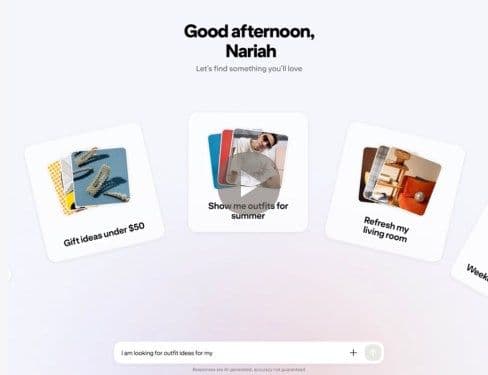
Pinterest launches an experimental AI shopping app called ‘Ask Pinterest’
Pinterest on Wednesday announced a new experimental app called “Ask Pinterest” that will allow the company to explore a more conversational approach to shopping and product discovery that could eventually find its way to the main Pinterest app. It also introduced other AI initiatives, including Pinterest Model Context Protocol (MCP), designed for advertisers running campaigns on Pinterest’s platform, and other AI ad tools. The news comes just ahead of the adtech industry’s annual gathering at Cannes Lions, which is this year mainly focused on how AI can serve the needs of advertisers and marketers. The “Ask Pinterest” online application gives the company another way to utilize its “Taste Graph” — its internal data mapping people to their interests and aesthetics. It will initially be available in limited access, the company said. The AI-powered experience is designed to expand the visual discovery experience Pinterest is known for beyond the main app to a conversational, chatbot-like interface where consumers can ask questions using natural language to get more personalized recommendations and inspiration. It also arrives as AI chatbots are increasingly competing with traditional search engines for consumers’ attention. Google has already put AI to work tohelp online shoppersfind what they need, track prices,and check out.ChatGPT alsoexperimented with agentic shopping, as haveMeta,Shopify, and others. Rather than turning itself into a source of product recommendations that other AI services could leverage through licensing deals, Pinterest has largely focused on using its own datato train AI modelsandpower its AI products. Plus, by making Ask Pinterest a standalone app, the company has a way to experiment with the technology without disrupting the main Pinterest experience. The company explains that Ask Pinterest could work for more complex or multi-step queries that wouldn’t fit a traditional Pinterest search. For instance, you could use the app to ask for help planning a dinner party or furnishing a room over time. The idea, says Pinterest, is to test and explore how AI could better support people’s shopping experiences while retaining the user’s context across sessions. Ask Pinterestcan also leverage users’ own saved Pins and Boards to personalize its answers when users sign in. In time, these results will help Pinterest when building more AI-powered experiences for the company’s flagship app, the company believes. Pinterest’s new app was announced alongside the updates aimed at marketers, including the introduction of an AI assistant, still in beta, in its Ads Manager in the U.S. A new AI model, Performance+ creative, was also introduced globally to help advertisers pick between different ad creatives to find the one that’s likely to perform best each time the ad is shown. And the MCP infrastructure layer that Pinterest announced will allow advertisers to manage and monitor their campaigns using other third-party agentic tools in a standardized way. In anannouncementsharing the news, Pinterest’s Chief Business Officer, Lee Brown, gestured towards the changing nature of web search, remarking that, “the future of discovery won’t be driven by keywords alone. It will be shaped by context, taste, and trusted recommendations” — an area where Pinterest feels it has a “unique advantage,” Brown said. Ask Pinterest is currently available to a limited number of people via the web, both mobile and desktop, the company says.
View

DeepL acquires Mixhalo for live-event audio streaming and translation
At conferences, speakers are often delivering their keynote or panel discussions in languages that many attendees might not know. That leads to users scrambling for their phones and opening translation apps to capture audio from a distance, which is not always effective. Mixhalo,a real-time audio startup that solves for situations like these, is joining DeepL to boost the German startup’s translation suite to help improve these kinds of translation experiences. Mixhalo was founded in 2016 by Incubus guitarist and songwriter Mike Einziger, violinist Ann Marie Simpson-Einziger, and Vik Singh, who is now the CEO of the startup. The company’s initial pitch was to improve the listening experience for concert attendees through its platform, but over the years evolved into a company that powers real-time audio for sports and live events. The startup raised over $39 million in capital from investors including Fortress Investment, Founders Fund, Defy Partners, and Cowboy Ventures. Mixhalo’s CEO Singh said in an email that tons of voice models coming to market were beneficial to Mixhalo, as it could integrate a variety of them and compare performance. He said that the rise of voice AI didn’t directly contribute to acquisition talks, but as model companies grow big, they would “start encroaching” on the space Mixhalo operated in, making it difficult to win on pricing. Mixhalo said it already relied on DeepL as its primary translation provider, and it made sense to work closer with the company. Singh tells us: “The DeepL conversation was very organic. Mixhalo has been a long-time DeepL customer, and I attended a customer dinner and ended up seated next to Sebastian, DeepL’s CTO. We just got to talking, and the more we talked, the more obvious the overlap became across the event space, the API, and the application layer, whether that is voice for meetings, document translation, or live event.” DeepL has been a text translation player for a long time, but in the last few years, it has started making noise about its voice products. In 2024, the company launchedvoice-to-text translation capabilities in over 33 languages. This April, it launcheda voice-to-voice translation suiteto support use cases like multilingual meetings. Mixhalo’s acquisition can push DeepL into the live event space with the same suite. “For us, Mixhalo will work as a solution and also a marketing use case. The platform will allow us to show how DeepL’s tech works in real-time and in environments like conferences where people are present on the ground,” DeepL CEO Jarek Kutylowski told TechCrunch in a call. Kutylowski said that with the acquisition of Mixhalo, which is based in San Francisco, DeepL is opening an office in the Bay Area to expand its U.S. operations. Mixhalo competes with the likes ofWordly AIandSeven Seven Six-backed Palabra.
View

Canadian pension giant joins race to fund India’s AI-fueled data center boom
As global investors race to fund the infrastructure underpinning the artificial-intelligence boom, Canada Pension Plan Investment Board’s CPP Investments has committed up to ₹70 billion (about $741 million) to Indian data center operator CtrlS, betting on India’s growing role in the global buildout of cloud and AI infrastructure. Under the partnership announced on Wednesday, CPP Investments will invest ₹40 billion (around $423 million) to acquire an 8.2% stake in CtrlS and commit up to ₹30 billion (about $317 million) to a joint venture to develop hyperscale data center campuses across India. CPP Investments will own 48% of the joint venture, while CtrlS will hold the remaining 52%, the companies said in a joint statement. Founded in 2007, CtrlSoperates more than 15 data centersacross India. The Hyderabad-based company has been expanding its footprint to meet rising demand from cloud providers, enterprises, and AI workloads. India has become a major destination for data center and AI investments as global technology companies and investors ramp up spending to meet surging computing demand. Companies includingAmazon,Google,Microsoft,OpenAI, andUberhave announced investments in the country in recent months, while operators are rapidly expanding capacity amid a broader global race to build AI infrastructure. “As one of the world’s fastest-growing digital markets, India represents an important pillar of our global data center strategy,” said CPP Investments’ global head of real assets Max Biagosch in a statement. CPP Investments, Canada’s largest pension investor, has been investing in India since 2009 and had net assets of about $20 billion in the country as of March 31, making it one of the largest foreign institutional investors in the market. The investment builds on CPP Investments’ broader push into digital infrastructure. The pension fund said it has invested in the data center sector since 2017 and has built a portfolio of assets and joint ventures across major markets worldwide. The partnership will help CtrlS expand capacity and build infrastructure tailored for AI workloads, said CtrlS founder and chief executive Sridhar Pinnapureddy. The CPP-CtrlS deal is the latest in a string of investments targeting India’s data center sector. Earlier this month, Blackstone-backedAirTrunksaid it would invest $30 billion to build five gigawatts of data center capacity in India by 2030.Meta, meanwhile, partnered with Reliance Industries last week on a 168-megawatt AI-enabled data center in the western state of Gujarat. New Delhi has sought to position India as a global hub for digital infrastructure through a range of policy measures, includingtax exemptions for foreign cloud providerson services sold overseas through 2047, provided those workloads are run from data centers located in the country. Indian conglomerates have also accelerated expansion plans to capitalize on the opportunity.Adani GroupandTata Consultancy Servicesare among the companies that have unveiled major data center projects aimed at supporting AI and cloud workloads. In 2023, CtrlSannounced plans to invest $2 billionover six years to expand its data center footprint across India. India’s growing role in AI infrastructure has not yet been matched by similar progress in developing frontier AI models. While the country has a handful of startups building indigenous AI models, includingSarvam, much of the underlying AI technology used by Indian companiescontinues to be supplied by U.S. firms. The rapid buildout of data centers is also expected to increase pressure on electricity and water resources, highlightingsome of the challengesthat could accompany India’s ambitions to become a major AI infrastructure hub.
View

Pramaana Labs raises $27M seed round from Khosla Ventures to bring formal verification to AI
As enterprises struggle to turn AI pilot programs into functional parts of their business, reliability has taken center stage. A new startup is hoping to solve that problem by drawing on the tools of mathematical formalization, combining one of computer science’s most reliable systems with one of its most chaotic. On Wednesday,Pramaana Labsannounced $27 million in seed funding led by Khosla Ventures, with participation from Accel, Boldcap, Nexus Venture Partners, Premji Invest, and Unbound. Pramaana will focus on highly sensitive verticals like law, drug discovery, and tax preparation — where errors can be costly and reliability is at a premium. Deploying AI in those systems will require stronger protections against hallucinations and errors than we currently have. But as Pramaana co-founder and CEO Ranjan Rajagopalan sees it, they’re also uniquely suited to formalization. “It’s like math in the sense that you have a lot of rules that you need to abide by,” Rajagopalan told TechCrunch, describing the rules of the tax code. “Once you have a codified version of it, the reasoning on top of it starts becoming deterministic.” Pramaana’s system still runs on a conventional LLM, giving it the flexibility to answer natural language questions and tackle complex problems that conventional computers can’t handle. But there’s a deterministic layer on top of that LLM ensuring the LLM’s work checks out. This combination of an LLM engine with deterministic verification isa popular setup; Pramaana’s unique approach is to use the tools of formal verification — drawing on the open-source LEAN programming language used to verify mathematical proofs. There’s real precedent for much of this work; Rajagopalan points toFrance’s CATALA project, which formalizes much of the country’s tax and benefit system into executable code. For each use case, Pramaana will build its own LEAN-style formal verification system, overseen by domain experts. For tax law, the company is working with former IRS commissioner Danny Werfel, while professors from IIT Delhi, IIT Madras, and UC Berkeley oversee the cybersecurity and drug discovery system. “The world’s hardest problems are not unsolvable. They are unformalized,” says Rajagopalan. “Every domain where being wrong can cost someone their health, money, or freedom has rules.” Now, those rules just need to be codified.
View
![[Exclusive] Gnani.ai to Launch 5 New AI Models, Including Speech-to-Text Model](/_next/image?url=https%3A%2F%2Fteenyfy-assets.s3.us-east-1.amazonaws.com%2Ftemp_exclusive_59c643ba11.jpg&w=750&q=75)
[Exclusive] Gnani.ai to Launch 5 New AI Models, Including Speech-to-Text Model
The first release, expected within days, is a speech-to-text model trained on 14 million hours of audio data.
View