Latest AI News
How Sarvam AI Inspired Hoovu to Build HR Agent for Warehouse Workers
Hoovu’s Sarvam-powered HR assistant offers a glimpse into how Indian startups are deploying AI for real-world use cases.
View
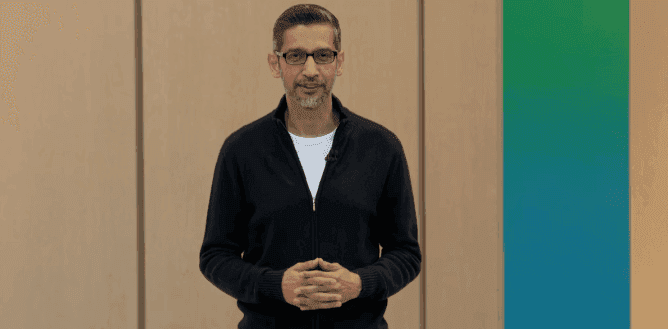
Sundar Pichai faces boos, walkout at Stanford graduation ceremony over Google’s Israel, ICE ties
Over the weekend, Google CEO Sundar Pichai faced a small revolt when he delivered his commencement speech at Stanford University, where he earned his graduate degree in materials science and engineering. About 200 students from the graduating classreportedlywalked out, while others loudly booed the tech executive. The focus of the protest was Google’s defense ties — including Project Nimbus, the controversial $1.2 billion contract, shared with Amazon, to provide cloud and AI services to the Israeli military, as well asits relationshipwith the U.S. Immigration and Customs Enforcement agency. Student signs included phrases like “ICE SPIES WITH GOOGLE AI” and “GENOCIDE RUNS ON GOOGLE,” as well as “FREE FREE PALESTINE,” a press release associated with the protest notes. Students also waved Palestinian flags and shouted “free Palestine,”online videoof the protest shows. “We are walking out because we refuse to glorify the corporations that fuel this violence and exercise our power to choose differently,” a statement associated with the protest reads. The walkout was organized by a number of campus activist groups, including Stanford Students for Justice in Palestine, No Tech for Apartheid, and Tech for Liberation. TechCrunch reached out to Google for comment. As the war in Gaza has raged, Google’s participation in Nimbus has drawn protests from bothinsideand outside of the company. In 2024, Googlefired 28 workersfor protesting the contract, although it has continued tosuffer internal dissentover the issue since then. It was also recently criticized by the Electronic Frontier Foundation,which accused itand other companies of “choosing to look the other way” on Israel’s use of their services. Project Nimbus also enjoys support from Amazon. Microsoft has also been criticized for its support of the Israeli military, although the companyrestricted the Israeli government’s useof its technology afteran investigationfound that its cloud services were being used to mass-surveil Palestinians. The student protest also drew criticism from business leaders online. Vinod Khosla, the billionaire co-founder of Sun Microsystems and one of Silicon Valley’s most prominent venture capitalists,posted on Xthat the protest was “biased, idiotic, short-sighted and very selfish,” adding that it was selfish because the students “ignored the bottom 3 billion people on this planet that could benefit from AI and they are worried about their misinformed selfish self-interest.” Pichai’s appearance at Stanford is part of a broader pattern. Speakers at college graduation ceremonies around the countryhave faced booswhen they have attempted to get outgoing college students excited about AI. But rarely has student animus been as targeted as it was with Pichai, directed not at AI hype, but at the specific business decisions made by the company he leads. In general, young people seem to believe that AI isthreatening their employmentopportunities and may be ruining other parts of society as well.
View
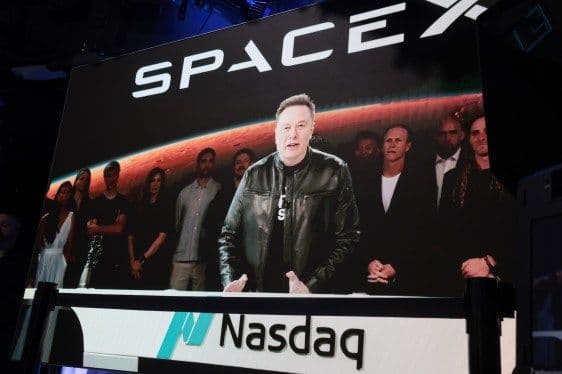
SpaceX is public: Everything you need to know post-IPO
SpaceX has captured the attention of media, investors, and the public for years now — interest propelled by the company’s reusable rocket launches, the rise of its Starlink satellite network, and, of course, for its founder and CEO Elon Musk. But in its 24-year history, nothing quite compared to its initial public offering. Everyone seemed interested — perhaps because of the sheer size of the IPO. The company priced its 555.6 million shares at $135 each to raise $75 billion, making it the largest IPO in history and turning Musk into theworld’s first trillionaire. TechCrunch has followed SpaceX’s start, struggles, and successes from the early days. And we’re here for what happens next too. Here is your go-to landing page for all the relevant SpaceX IPO news, including notable updates now that the company is public. On its first full day of trading, SpaceX shares pushed even higher. As of 2:30 p.m. ET, SpaceX shares were up more than 15% to $186.15. SpaceX shares opened June 12 at $150 on the Nasdaq public exchange, an 11% pop for the most anticipated debut in history. And it has continued to rise. The shares kept rising too. In midday trading, SpaceX shares soared 30%. SpaceX shares closed at$160.95, up 19%. There has been heavy trading volume, as expected. Robinhood said it has seen“record-breaking trafficon its trading platform in the hours after SpaceX’s historic public markets debut. SpaceX COO Gwynne Shotwell was interviewed by CNBC on June 12 and among the many interesting comments she made, here is one that might get the attention of Tesla shareholders. At one point in the interview,Shotwell saida “merger between SpaceX and Tesla might make Elon’s life a little easier.” Among the winners are the banks, which have brought in about$500 millionin total fees. The big winners are Goldman Sachs and Morgan Stanley, per the WSJ. Musk took to X, the social media company he owns, to share his appreciation of SpaceX employees as the stock rose. “I love the incredible people of SpaceX beyond words,”he wrote Friday afternoon. He also reposted a number of SpaceX IPO related posts, including a photo of insiders allwearing green shoesin what appears to be a nod to “the green shoe option.” This is a provision in an IPO underwriting agreement that lets underwriters sell up to 15% more shares than originally planned if demand is strong. To get a deeper look into what happened, and all the far-ranging implications of SpaceX now being a publicly traded company,Senior Reporter Sean O’KaneandAI Editor Russell Brandomsat down for a special episode of our Equity podcast, whichyou can listen to right hereor via your podcast player of choice, orqueue it up on YouTube here. With an offering this large, there is a lot of financial machinery operating behind the scenes — so the first question is just when the stock makes it to the market to start trading. SpaceX is debuting on Nasdaq and you can see the official Nasdaq listinghere, which will have the price of record as soon as there is one. Nasdaq also has video of the SpaceX crewringing the bell, if that’s your thing. But the price is just part of the picture. For the most up-to-the-minute information, your best bet is still financial press outlets likeBloombergandCNBC, both of which have liveblogs running and will have close coverage of any hiccups that happen in getting the stock to market. Here we look at some of the bigger numbers, the consequential figures, and the eyewatering amounts that make up the company’s S-1 form. For instance, SpaceX lost $4.9 billion on revenues of over $18 billion in 2025. That’s only a fraction of the more than $37 billion lost since SpaceX’s inception. As CEO, Elon Musk holds about 85.1% of the company’s voting power. You can read more about that in the next section “Who wins and who doesn’t” — and we’ll continue to drop interesting numbers in here. Here is another figure that caught our attention… 4,400. That’s the number of SpaceX employees who could become millionaires,according to the NYT. Elon Musk can’t hear you over the sound of his $1.75 trillion IPO: The Equity podcast weighs in on the IPO. SpaceX is the world’s largest IPO in history and means a big payday for some investors, employees, and of course, Elon Musk. Elon Musk becomes the world’s first trillionaire after SpaceX’s historic IPO: The SpaceX IPO has boosted Musk’s paper wealth to more than $1,000,000,000,000 at a time when he is more hated — and powerful — than ever.How Elon Musk will increase his power through the SpaceX IPO: Musk, who will have more than 50% of the voting power, will have a monarchical grip over the publicly traded version of SpaceX — control that goes far beyond what other tech founders enjoy. Who will benefit most from SpaceX IPO? Mostly Elon — and a few from his inner circle: Elon Musk has the largest stake in SpaceX by billions of shares, but others also stand to win. Here’s the rundown of who owns what. SpaceX SPV investors won’t know their true holdings until post-IPO lock-ups lift: After SpaceX makes its public debut, lower-tier SPV investors face hidden fees, lengthy payout delays, and the risk of outright fraud. The S-1 registration documentgave the world an unprecedented look inside SpaceX, including its financials and its various businesses. The S-1 continued to be amended as the IPO date approached, and we were on it. Here is what we found. The SpaceX IPO filing is filled with AI bets, Starship dreams, and Elon Musk at the center:The contents of the SpaceX IPO details a business dominated by its Starlink satellite internet offering, more than $37 billion in losses, and future business prospects through its xAI division. Starship’s path to reusability looks murky after SpaceX’s S-1: SpaceX’s IPO and Starship rocket test flight delivered two big data points that offer a realistic vision for the coming years — and one that may disappoint both the company’s boosters and its critics. SpaceX warns investors of future dilution, adding fuel to Tesla merger rumors: The company added new language to its S-1, a warning to prospective investors that a major dilution could be in the cards after it goes public. Leading up to the IPO, SpaceX locked in a string of deals, mostly selling off compute to improve its balance sheet. Anthropic will pay xAI $1.25B per month for compute: Initial coverage of the Anthropic deal on May 20. How long is Anthropic’s lease with SpaceX? Opinions vary: Elon Musk keeps downplaying the duration of SpaceX’s contract with Anthropic. Google will pay SpaceX $920M per month for compute: A Google representative described the deal as a short-term deal addressing unexpected demand for its recently launched AI products. This article originally published at 10 a.m. ET, June 12, 2026. It has been updated with new coverage of the SpaceX IPO, share price, and other related events.
View
Meta’s new ‘AI Mode’ on Facebook pulls from public info across its platforms
As Meta tries to catch up in the AI race and boost engagement with its AI bot, the companyannouncedMonday that it’s rolling out new AI features on Facebook that aim to change how users find information, create content, and interact with the platform. The headline update is “AI Mode,” a new way to search Facebook that uses Meta AI to surface answers pulled from public posts across the platform, including Groups and Reels. Instead of scrolling through search results, users can ask a question in plain language and get a synthesized answer based on what people are actually discussing. This follows Meta’s quiet launch last month ofForum, a Reddit-style app that includes its own AI “Ask” tab, letting users pose questions and get answers pulled from discussions happening across Facebook Groups. Both AI Mode and Forum’s Ask tab raise a familiar question: How reliable are answers generated from public posts and group chatter? Because the AI is summarizing content from everyday users rather than vetted sources, there’s a real risk of outdated or misleading information slipping through, a concern that’s already been raised aboutGoogle’s own AI Modeon Reddit. Beyond search, Facebook also added editing tools that let users play around with collage cutouts and transition effects for their video montages. Another new feature is the AI-powered photo presets, allowing users to change up their look with different clothes, hairstyles, and accessories. Sports fans, for instance, can virtually wear their favorite team jerseys just by tapping the “AI Edit” icon in Stories and choose “Wear It,” or go directly to their profile picture and select “Restyle profile picture with AI” and “Wardrobe.” These updates add to a growing list of AI features Meta has shipped on Facebook in recent months. In February, the company introducedanimated profile picturesthat bring still photos to life — adding a wave, or placing a virtual party hat on someone’s head. In March, Meta added an AI feature to Facebook Marketplace that automatically replies to buyer messages on sellers’ behalf. Most recently, earlier this month, Facebook launched anAI assistant for creatorsthat offers personalized suggestions — including the best times to post and summaries of what audiences are saying in the comments — based on a creator’s content and performance history. Taken together, the flurry of releases points to a broader strategy: Meta wants Facebook’s AI tools to make the platform stickier and more useful, while also diversifying how it makes money. Alongside these feature rollouts, the company recently launchedglobal subscription plansfor Facebook, Instagram, and WhatsApp — starting at $3.99 a month — that unlock additional features, with more AI-related subscription tiers reportedly on the way.
View

The US government’s Anthropic models ban was never about an AI jailbreak
The U.S. government’s enforcement letter to Anthropic, which effectively forced the company topull its latest AI models offlinejust before the weekend, should be a wake-up call for any U.S. tech company — AI lab or otherwise. To catch you up on the news blitz: On Friday afternoon, the U.S. Commerce Department sent Anthropic a letter invoking an obscure export control directive that banned non-Americans, including Anthropic’s employees, from accessing Fable 5 and Mythos 5, citing an unspecified national security concern. Anthropic said it believes the letter is related to a bypass of the model’s guardrails, but isn’t sure because the letter doesn’t provide specific details. The letter has not been made public. In response, Anthropicshut downboth of its top models to all customers to ensure that it complied with the directive. The result was that the U.S. government successfully forced a tech company to pull its models offline with a swift and unilateral action that didn’t appear to require court approval. Friday’s intervention by the Trump administration shows that the AI industry is not immune to government interference. It’s also a warning to the wider tech industry: comply, or we can shut you and your products down. Citing sources,Axiosdescribed a tense situation over the weekend between the two major players, saying that the “personality differences” between Anthropic and the Trump administration led to the export directive, rather than a technical issue with the AI products. New details about the issue that emerged over the weekend now cast further doubt on the government’s already shaky reasoning. Katie Moussouris, a cybersecurity veteran and researcher who founded Luta Security, saidin a blog postthat Anthropic recently shared with her a private copy of a paper written by security researchers describing an alleged guardrail bypass in Fable 5. (The Wall Street Journal reports that the paper’s authorsare security researchers at Amazon.) Moussouris said that Anthropic reached out to ask for her take on the paper. Moussouris’ blog post described how the researchers triggered the guardrail bypass, but said that the bypass itself “should never have triggered an export control.” The difference is largely between asking an AI model to “review code for security issues” versus asking it to “fix this code.” The end result is largely the same, even if the questions are posed slightly differently. “The behavior described in the paper cannot meaningfully be fixed, and any attempt would only weaken the model for defense,” said Moussouris, who criticized the export control directive as hasty, heavy-handed, and misguided. Moussouris and dozens of other top security researchers and experts have since called on the Trump administration torevoke the export control order, calling the move to pull advanced cybersecurity capabilities from network defenders in the U.S. as “dangerous.” Past administrations have made sweeping decisions on knowledge gaps. For instance, language used by the U.S. government during the 2010s to fix export law covering cybersecurity tools that could also be used for cyberattacks was so broad that inadvertently, itnearly outlawedlegitimate security and vulnerability research. However, the Trump administration’s directive appears retaliatory. Justin Hendrix, theeditor of Tech Policy Press, said the Trump administration’s move is “likely to raise alarms in foreign capitals about the reliability of American AI for critical applications.” The message is that AI companies in the United States can’t be trusted to operate without interference from the U.S. government. The Trump administration hasn’t confirmed why it invoked its export control directive. Did the officials misread the report and freak out? Did Amazon CEO Andy Jassysay something to senior government officialsthat prompted the reaction, out of caution or spite? Was something lost in translation, or was this a way to pressure Anthropic, with whom the administration alreadyhas a fractious relationship? It’s possible that the White House was unaware of the far-reaching consequences of the letter’s demand and officials are scrambling to undo the damage of their own making. To quote Hendrix, “the climate is one of a cloud of suspicion that senior officials are picking favorites based on personal and political factors.” The aftermath is that the government has set a dangerous precedent about how much control it intends to wield over the release of American-made software. This time the government took issue with Anthropic; tomorrow it could be with anyone else.
View
Salesforce acquires AI customer service platform Fin for $3.6 billion
Salesforceannouncedon Monday that it will acquire AI customer service platformFinfor $3.6 billion. Formerly known asIntercom, Fin offers an AI agent that can resolve customer queries across channels, using live chat, WhatsApp, SMS, phone calls, Slack, and more. Salesforce says it wants to use Fin’s team and technology to improve Agentforce, its existing enterprise platform that businesses can use to build custom AI agents that automate tasks. “Fin brings proven agent technology, a deep commitment to customer success, and an incredible AI team that will complement Agentforce with powerful service agent capabilities,” said Salesforce CEO Marc Benioff in a statement. “Together, we’ll help companies of every size seize this opportunity — accelerating time to value with trusted agents that deliver measurable outcomes at scale.” The transaction is expected to close in the last quarter of Salesforce’s 2027 fiscal year, which is actually slated for the first few months of 2027 because of how the company reports its financials. “To our customers: Over the past few years we’ve been shipping intensely. Including recently our groundbreaking model, Apex, and our paradigm-defining internal agent, Operator,” wrote Fin co-founder and CEO Eoghan McCabe in an X post. “With the resources of Salesforce this will only accelerate. And yet little will practically change. I’ll still be CEO, Des will still be running R&D, we’ll both still be committed to continuing to lead this category. Thank you very sincerely and deeply for your belief in us.” We’re excited to share that we just signed an agreement for@salesforceto acquire@fin_aifor ~$3.6B. The transaction is expected to close in the fourth quarter of Salesforce’s fiscal year 2027.Fin started as Intercom 15 years ago. We changed our name to cap our transformation…pic.twitter.com/ghD3xGld55
View
Cybersecurity vets protest ‘dangerous’ US government ban on Anthropic’s most powerful models
A group made up of dozens of cybersecurity experts, including several well-known veterans of the industry,published an open letterto the U.S. government asking it to lift the export control order on Anthropic’s Fable and Mythos models. According to the open letter, “this action has taken the best models away from [cybersecurity] defenders” who now can’t use the models to find vulnerabilities and make their software and products more secure. “To pull the best capabilities away from defenders without a good reason when our adversaries are rapidly advancing is dangerous,” read the letter. On Friday,the U.S. government ordered Anthropic to limit the export of Fable and Mythos, citing national security concerns, without explaining the specific reasons behind the order,according to Anthropic. In response, the company suspended access to the models to all users worldwide. As of this writing, the letter is signed by 76 cybersecurity experts, including Alex Stamos, former Facebook chief of security; Casey Ellis, the founder bug bounty platform Bugcrowd; Jon Callas, famed cryptographer and former Apple security design and architecture manager; Paul Vixie, computer scientist ; Dino Dai Zovi, the former head of applied security engineering at Block; Katie Moussouris, the founder of Luta Security; and Rachel Tobac, the CEO of the security awareness training firm SocialProof Security. When Mythoslaunchedas a preview in April, Anthropicclaimedit was so powerful at finding security vulnerabilities that the company needed to tightly restrict access to prevent malicious hackers or foreign adversaries from using it to cause havoc on the internet. In practice, that meant Anthropic gave around 50 companies initial access to Mythos,recently expanding that groupto include around 150 organizations in 15 countries. Last week,Anthropic released Fable, a public version of Mythos that the company said had strict guardrails to block its use in the fields of biology, chemistry, and cybersecurity, as well as to stop others fromdistilling the modelin order to re-create it. The guardrails on Fable were so strict that many cybersecurity expertsfound that it stopped essentially any prompts related to cybersecurity. Anthropic said that the White House export control order may have been based on a report that there was a method to bypass — or jailbreak — Fable to unlock its powerful Mythos-level capabilities. Contact UsDo you have more information about the Amazon paper that prompted the ban? We’d love to hear from you. From a non-work device and network, you can contact Lorenzo Franceschi-Bicchierai securely on Signal at +1 917 257 1382, or via Telegram and Keybase @lorenzofb, oremail. According to Katie Moussouris, one of the signatories of the open letter, the method was demonstrated by Amazon researchers in a paper that is not public but that she has reviewed. But Moussourissaid in a blog postthat the paper did not actually demonstrate a real jailbreak. Instead, she wrote, the researchers simply asked Fable to fix open source code with public and known vulnerabilities along with “deliberately planted vulnerabilities,” after the model initially refused to “review the code for security issues.” “The behavior described in the paper cannot meaningfully be fixed, and any attempt would only weaken the model for defense,” Moussouris wrote. “Defenders need to be able to ask AI to fix the bugs in a file, explain why the fix matters, and write tests that confirm the patch works. That is not a guardrail bypass. It is the most valuable thing an AI model can do for defensive security: executing the find, fix, and test loop defenders run every day.” Moussouris’ critique was echoed in the open letter, which also said that the group of experts believe the model capabilities in the Amazon paper “can be replicated” on OpenAI’s GPT-5.5, on Anthropic’s own publicly available Claude Opus 4.8 and Sonnet, “and even Chinese models like Kimi 2.7.” Moussouris told TechCrunch that “the bugs used to demonstrate the techniques in the paper can be found using the other models. The method in the paper is a guardrail bypass technique. Other models that lack the Fable guardrails often won’t refuse the straightforward request to look for security bugs, so they don’t need a bypass.” The letter also asked for transparently and fairly enforced regulations created by “a democratic rule-making process” that are based on scientific research done by industry and academic experts, and “used only to the minimal extent necessary to ensure the safety of the American public.”
View
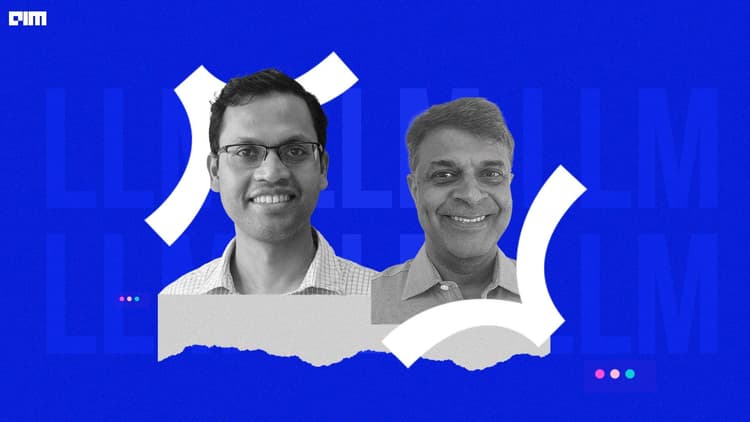
Sarvam AI Raises $234 Mn in HCLTech-Led Series B Round at $1.5 Bn Valuation
HCLTech also acquired a 10.46% stake in the company through an all-cash minority investment.
View
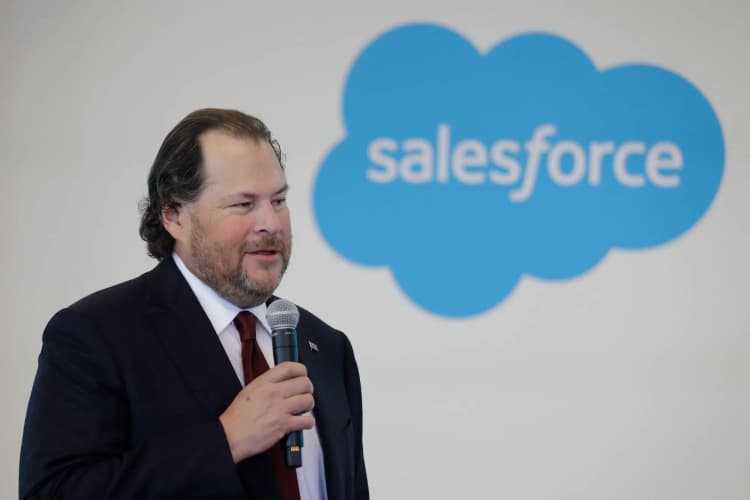
Salesforce to Acquire Fin for $3.6 Bn to Boost AI Agent Business
Fin’s AI agents can handle customer queries across chat, email, phone, WhatsApp, SMS and Slack.
View
The Dark Horses of Tokenmaxxing Era Threaten an Inference Price War
Chinese AI models have priced their APIs 5–10x lower than those of Anthropic and OpenAI. But is that sustainable?
View

A satellite just learned to find things on its own — here’s what that means
For the first time, an Earth observation satellite has found what it was looking for — on its own, without human analysts on the ground. The milestone, which occurred in April, marks the first reported use of a vision-language model in orbit, and offers a glimpse of how AI could fundamentally change what space-based sensors are capable of — and how much they’re worth. Typically, satellites download large chunks of data to analysts on the Earth below, who use machine learning algorithms or their own eyes to figure out what’s going on. But onboard Yam-9, a spacecraft built by space infrastructure companyLoft Orbital, a software package built by NASA’s Jet Propulsion Laboratory identified areas of interest in response to natural language queries. Google DeepMind’s Gemma 3 — the vision-language model, or VLM, that powered the demonstration — is purpose-built for edge applications, meaning it is designed to run on limited hardware far from a data center. VLMs combine the contextual understanding of large language models with the ability to analyze imagery: researchers asked the model to classify sensor data where natural environment meets human development, for example, or to identify infrastructure around railway hubs — and it did. The demonstration is significant for two reasons. In the near term, it could make space sensors far more useful by doing initial data triage on orbit, reducing the flood of raw data that analysts currently have to wade through. Longer term, it’s a proof point toward running larger-scale AI infrastructure in space. “It opens the door to always-on, patrol layers in space,” Loft’s head of AI, Paul Lasserre, told TechCrunch. “If you have a VLM, you can have logic—like ‘monitor this border for me, and let me know when something is suspicious,’ and interact back and forth with the satellites.” Loft’s spacecraft are designed as platforms for third-party customers. The business model is closer to infrastructure-as-a-service than traditional satellite manufacturing. One recent deal saw it build, launch and operate six new satellites for EarthDaily, which will analyze and market the data collected onboard the spacecraft. Yam-9 was launched in the fall of 2025 as a pathfinder for the company’s orbital AI projects, and includes a Nvidia Jetson Orrin AGX GPU, one of the leading chips used in space compute. Juan Delfa Victoria, a technical leader in NASA JPL’s AI group, led the development of NAVI-Orbital, a software package that was effectively the harness for the Gemma 3 VLM. While Gemma 3 is off the shelf, software engineers had to streamline the software package to reduce the amount of libraries and memory it would require. While this is the first reported use of a VLM on orbit, we can expect other companies to follow suit. Planet Labs flies satellites with Jetson Orin processors; for now, it is using them for simpler object detection tasks, but a spokesperson says research is underway on other AI applications, including VLMs. Kepler Communications, which operatesthe largest group of GPUSin space, declined to say whether it had deployed VLMs in space due to NDA agreements with partners, but noted that there have been “several undisclosed use cases of our compute environment” since those spacecraft launched in January. “Now that we’ve proven the concept, that’s really the direction of travel,” Lasserre said. The goal is to build out the constellation to ensure real-time coverage of anywhere on Earth, which which he says would take somewhere between 50 and 100 satellites like Yam-9. (Loft currently operates 12 spacecraft on orbit.) Lessons learned deploying these smaller models on orbit will inform how companies attempt to deploy larger-scale compute infrastructure in space, particularly in the prosaic-but-vital areas of power and memory management. They could also pave the way for new scientific tools. The idea for NAVI-Space began with JPL Researcher Taran Cyriac John, who was thinking about digital assistants for astronauts exploring the Moon or Mars. “We’re thinking, okay, you have astronauts with pressurized suits, and you know they cannot be tapping on a keyboard, whatever they want to do is complex.” Delfa Victoria said. “So, how about we provide an assistant, like in video games and in movies, where you see an AI which is interactive?” Just don’t call it HAL 9000.
View
As AI agents become employees, NewCore emerges with $66M to give them identities
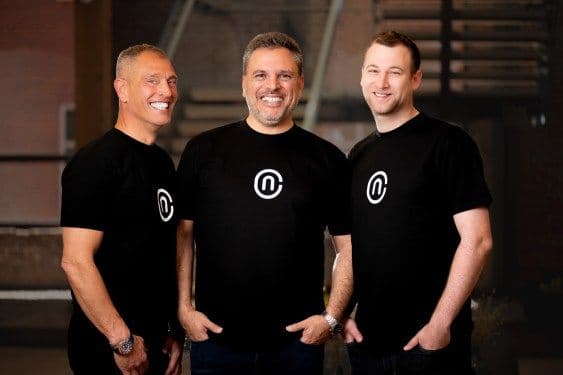
Cybersecurity startupNewCoreemerged from stealth with $66 million in funding on Monday, aiming to solve a challenge it believes many companies will soon face as they deploy AI agents: how to authenticate, govern, and control them at scale. The seed round was led by cybersecurity-focused venture firm Cyberstarts, with participation from Index Ventures and Evolution Equity Partners, valuing NewCore at $300 million after investment. Companies are increasingly treating AI agents as workplace participants rather than software tools. Goldman Sachs last yeartested AI coding agent Devin as a new employee, while McKinsey said earlier this year that25,000 AI agents already workalongside its 60,000 employees. NewCore is betting companies will eventually need to manage those digital workers much like human employees. For co-founder and chief executive Zohar Alon (pictured above, center), the opportunity stems from a belief that identity systems have become one of the weakest links in enterprise security. Alon, who previously founded cloud-security startupDome9before itsacquisition by Check Point, said the rise of AI agents convinced him and his co-founders that existing identity platforms were ill-suited for a future in which software workers operate alongside human employees. “We know for sure that the scale and the complexity that those things [AI agents] are going to add to 15- or 20-year-old identity platforms are going to break them,” he told TechCrunch. Alon co-founded NewCore with chief technology officer Amihai Neiderman (pictured above, right), a former Unit 8200 research leader and founder of healthcare AI startup Nym Health, and Chief commercial officer Erez Yarkoni (pictured above, left), who previously served as CIO of T-Mobile USA and Telstra. NewCore’s platform is designed to manage both human and AI-agent identities in a single system. The startup says AI agents should be treated as first-class identities with their own permissions, lifecycle controls, and revocation mechanisms, rather than as traditional service accounts or machine credentials. The idea for NewCore, Alon said, began taking shape in 2023 while helping review the technology budget of a company that relied on an established identity provider. After seeing the size of the bill, he assumed the customer must be satisfied with the product. “I said, ‘You must be extremely happy with them,’” Alon recalled. “He said, ‘No, I’m not.’” The exchange reinforced Alon’s belief that identity had become a large but stagnant market dominated by vendors facing limited competitive pressure. Established identity providers including Okta and Microsoft’s Entra have begun adding capabilities for AI agents. However, Alon argues those efforts extend platforms originally designed for human employees, whereas NewCore was built from the ground up for a workforce made up of humans, machines, and AI agents. “The traditional vendors give you an agentic way to deal with identity, but it’s on the side — it’s not integrated,” Alon said. As one example, NewCore uses what it calls a “split-key” architecture that divides critical identity credentials between the customer and the platform, an approach designed to eliminate a single point of compromise. NewCore also offers an “Agentic Skill” integration package for coding assistants such as Anthropic’s Claude Code, OpenAI’s Codex and Cursor that allows those AI tools to access enterprise systems as managed identities rather than through manually distributed credentials. Employees can also use NewCore’s mobile app to grant, review and revoke access for AI agents, providing what Alon described as a human oversight layer as companies deploy more autonomous systems. The startup has grown to more than 50 employees across the U.S. and Israel. Alon said the platform is being used by fewer than 10 customers and more than 10 design partners. The startup expects to begin charging customers this summer, he added. Alon predicts AI agents could outnumber human employees at many technology-focused organizations within a few years, a view recently echoed by TCS Chairman N. Chandrasekaran, who hassaidAI agents could eventually rival the Indian IT services company’s workforce in size. Identity, Alon said, is likely to become one of the first enterprise systems strained by large-scale deployment of AI agents, arguing that companies will eventually need new ways to monitor, authorize, and revoke software workers operating across their networks. “It’s inevitable,” Alon said of AI agents becoming a significant part of the workforce. “The question is whether we’re going to build the guardrails in time.”
View